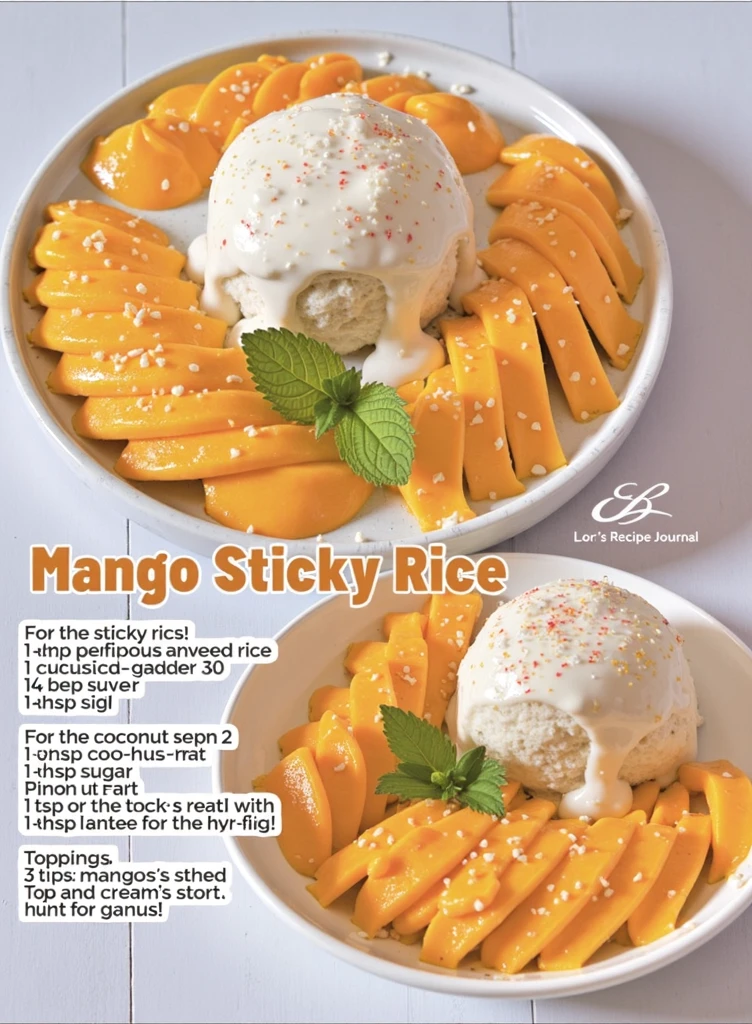
The first time I tasted authentic Mango Sticky Rice at a small Thai restaurant, I was completely mesmerized. The combination of sweet, perfectly ripe mango slices paired with warm, coconut-infused sticky rice and drizzled with rich coconut sauce seemed almost impossibly delicious. I assumed creating this magical dessert at home would be complicated and require specialized equipment. I was wonderfully wrong. Mango Sticky Rice is surprisingly simple to make, and once you master it, you’ll have an elegant, exotic dessert perfect for any occasion.
What makes Mango Sticky Rice so special is the beautiful harmony of textures and flavors—the creamy sweetness of ripe mango, the chewy tenderness of properly cooked sticky rice, and the rich, slightly salty coconut sauce that brings everything together. Moreover, this dessert is naturally gluten-free and can be made vegan, making it accessible to many dietary preferences while remaining authentically delicious.
Understanding the Components of Mango Sticky Rice
Mango Sticky Rice consists of three essential elements, each requiring attention to detail for the best results.
The Sticky Rice: Unlike regular jasmine rice, Mango Sticky Rice requires glutinous rice (also called sweet rice or sticky rice). Despite the name, it contains no gluten—the term refers to its sticky, clingy texture when cooked. This special rice has a higher starch content that creates the characteristic chewy texture essential to authentic Mango Sticky Rice.
The Coconut Sauce: This isn’t just coconut milk poured over rice. Proper Mango Sticky Rice uses coconut milk that’s been sweetened, seasoned with salt, and sometimes thickened slightly. The sauce should be rich and coating, not thin and watery.
The Mango: Only perfectly ripe mangoes will do for Mango Sticky Rice. They should be sweet, fragrant, and yield slightly to gentle pressure. Underripe mangoes are too tart and firm, while overripe ones become mushy and fermented-tasting.
Essential Ingredients for Perfect Mango Sticky Rice
Sticky Rice:
- 1 cup glutinous (sweet) rice
- 1¼ cups coconut milk
- ½ cup sugar
- ¼ teaspoon salt
Coconut Sauce:
- ½ cup coconut milk
- 1 tablespoon sugar
- Pinch of salt
- 1 teaspoon cornstarch mixed with 1 tablespoon water (for thickening)
Serving:
- 2 ripe mangoes, sliced
- Toasted sesame seeds
- Fresh mint for garnish (optional)
The quality of your coconut milk dramatically affects your Mango Sticky Rice. I always use full-fat coconut milk—the kind that separates in the can with thick cream on top. This richness is essential for authentic flavor and texture.
Step-by-Step Instructions for Mango Sticky Rice
Step 1: Soak the Rice
Place glutinous rice in a large bowl and cover with cold water by at least 2 inches. Soak for a minimum of 4 hours, or preferably overnight. This soaking is absolutely crucial for Mango Sticky Rice—it ensures the grains cook evenly and achieve proper texture.
After soaking, drain the rice thoroughly in a fine-mesh strainer. Rinse under cold water until the water runs clear, removing excess starch.
Step 2: Steam the Rice
Line a bamboo or metal steamer basket with cheesecloth or a thin kitchen towel. Spread the soaked rice evenly across the cloth—don’t pile it too high or it won’t cook evenly.
Bring water to a boil in your steamer pot (the water shouldn’t touch the rice). Place the steamer basket over the boiling water, cover tightly, and steam for 20-25 minutes. The rice is done when the grains are tender and translucent with no hard white centers remaining.
Proper steaming is essential for authentic Mango Sticky Rice. Boiling the rice in water (like regular rice) creates the wrong texture entirely—it becomes mushy rather than pleasantly chewy.
Step 3: Prepare the Coconut Mixture
While rice steams, prepare the coconut mixture that will infuse your Mango Sticky Rice with flavor. Combine 1¼ cups coconut milk, ½ cup sugar, and ¼ teaspoon salt in a small saucepan.
Heat over medium heat, stirring constantly, until sugar dissolves completely. Don’t let it boil—just warm it enough to dissolve the sugar. The mixture should be smooth and slightly thickened from the coconut cream.
Step 4: Combine Rice and Coconut
Immediately after steaming, transfer hot rice to a large bowl. Pour the warm coconut mixture over the rice and stir gently to combine. The hot rice will absorb the coconut milk like a sponge, creating the rich, creamy consistency that makes Mango Sticky Rice so special.
Cover the bowl with plastic wrap or a clean kitchen towel and let sit for 30 minutes. During this time, the rice continues absorbing liquid and the flavors meld beautifully. This resting period is crucial—rushing it results in Mango Sticky Rice that’s too wet or unevenly flavored.
Step 5: Make the Coconut Sauce
In a small saucepan, combine ½ cup coconut milk, 1 tablespoon sugar, and a pinch of salt. Bring to a gentle simmer over medium heat.
Mix cornstarch with water to create a slurry, then whisk it into the simmering coconut milk. Continue cooking and stirring for 1-2 minutes until the sauce thickens slightly. It should coat the back of a spoon when ready.
This thickened sauce is what you’ll drizzle over the plated Mango Sticky Rice. It should be pourable but not watery—thick enough to cling to the rice and mango without running off immediately.
Step 6: Prepare the Mangoes
Select mangoes that are perfectly ripe—they should be fragrant, yield slightly to gentle pressure, and have golden-yellow skin (for most varieties). Underripe mangoes ruin Mango Sticky Rice with their tartness and firm texture.
Peel the mangoes and slice them into elegant pieces. The traditional presentation for Mango Sticky Rice involves thin slices arranged in a fan pattern, though you can cut them however you prefer.
Step 7: Plate and Serve
Mound a generous portion of sticky rice on each plate. Arrange mango slices attractively beside the rice—the traditional presentation places them in a fan or overlapping pattern.
Drizzle the warm coconut sauce over both the rice and mango. Sprinkle with toasted sesame seeds for crunch and visual appeal. Garnish with a small mint leaf if desired.
Serve immediately while the rice is still slightly warm. This temperature contrast between warm rice and cool mango is part of what makes Mango Sticky Rice so delightful.
Pro Tips for Perfect Mango Sticky Rice
Use the Right Rice: Regular jasmine rice, short-grain rice, or sushi rice won’t work. Only glutinous/sweet rice creates authentic Mango Sticky Rice texture. Check Asian markets if your regular grocery store doesn’t carry it.
Don’t Skip Soaking: I know it requires planning ahead, but the overnight soak is non-negotiable for proper Mango Sticky Rice. Unsoaked rice won’t cook evenly and will have hard centers.
Steam, Don’t Boil: Steaming creates the characteristic chewy, sticky texture. Boiling makes the rice mushy and waterlogged, completely different from authentic Mango Sticky Rice.
Quality Coconut Milk Matters: Use full-fat coconut milk from a can, not the carton kind meant for drinking. The thick, rich canned version is essential for proper Mango Sticky Rice.
Perfect Mango Ripeness: This cannot be emphasized enough—underripe mangoes are too tart and firm for Mango Sticky Rice. Wait for perfectly ripe fruit even if it means delaying your dessert plans.
Serve Fresh: Mango Sticky Rice doesn’t refrigerate well. The rice becomes hard and the texture changes. Make only what you’ll serve immediately.
Add Salt: Don’t skip the salt in both the coconut rice mixture and sauce. It balances sweetness and enhances all the flavors in Mango Sticky Rice.
Traditional Variations of Mango Sticky Rice
Black Sticky Rice Version: Use black glutinous rice instead of white for a dramatic, nutty variation of Mango Sticky Rice. The cooking time increases to 30-35 minutes, and the finished rice has a beautiful purple color.
Pandan-Flavored: Add 2-3 pandan leaves (tied in a knot) to the coconut mixture for traditional aromatic flavor in your Mango Sticky Rice. Remove before serving.
Extra Crispy Topping: Some versions of Mango Sticky Rice include crispy mung beans or fried shallots on top for textural contrast.
Durian Version: For the adventurous, replace mango with durian—the so-called “king of fruits.” This creates an intensely flavored version of Mango Sticky Rice popular in Thailand.
Modern Twists on Mango Sticky Rice
Coconut Ice Cream Addition: Serve Mango Sticky Rice with a scoop of coconut ice cream for an over-the-top indulgent dessert.
Mixed Fruit: While mango is traditional, strawberries, peaches, or mixed tropical fruits create delicious variations of Mango Sticky Rice.
Chocolate Drizzle: Add a drizzle of melted dark chocolate over the coconut sauce for a fusion twist on Mango Sticky Rice.
Presentation Variations: Serve in small bowls, martini glasses, or even as individual portions in bamboo leaves for elegant presentation.
Troubleshooting Common Issues
Rice is Too Wet: You added too much coconut mixture or didn’t let the rice rest long enough. Let it sit uncovered for 10-15 more minutes to absorb excess liquid.
Rice is Too Dry: You didn’t add enough coconut mixture or the rice overcooked and dried out. Add a bit more warm coconut milk and stir gently.
Rice Has Hard Centers: The rice wasn’t soaked long enough or wasn’t steamed completely. Always soak overnight and check for doneness by tasting a few grains.
Coconut Sauce is Too Thin: You didn’t add enough cornstarch or didn’t cook it long enough. Return to heat and add a bit more cornstarch slurry.
Mangoes are Too Tart: They weren’t ripe enough. Unfortunately, there’s no fix except buying riper mangoes. Store underripe mangoes at room temperature until they ripen for your next batch of Mango Sticky Rice.
Selecting and Preparing Perfect Mangoes
The mango makes or breaks Mango Sticky Rice, so selection is crucial:
Look for:
- Golden or reddish-yellow skin (depending on variety)
- Slight give when gently squeezed
- Sweet, fragrant aroma at the stem end
- Smooth skin without major blemishes
Avoid:
- Rock-hard mangoes (severely underripe)
- Very soft or wrinkled skin (overripe)
- Dark spots or severe bruising
- No aroma (indicates underripeness)
Ripening Tip: Place underripe mangoes in a paper bag at room temperature. They’ll ripen in 2-5 days. Adding an apple or banana to the bag speeds the process.
Cutting Technique: Stand the mango on its narrow end. Cut along both sides of the flat pit. Score the flesh in a crosshatch pattern without cutting through the skin, then invert and slice off the cubes. This creates uniform pieces perfect for Mango Sticky Rice.
Cultural Significance of Mango Sticky Rice
Mango Sticky Rice (Khao Niao Mamuang in Thai) is more than just dessert in Thailand—it’s a cultural icon representing Thai culinary excellence. The dish appears at celebrations, temple offerings, and everyday street food stalls.
The dessert showcases Thailand’s abundance of both mangoes and coconut, two ingredients central to Thai cuisine. Mango season (April-June) is when Mango Sticky Rice is most commonly enjoyed, though the dessert is now available year-round thanks to imported mangoes.
Making authentic Mango Sticky Rice at home connects you to this rich tradition while demonstrating that seemingly exotic desserts can be accessible to home cooks anywhere.
Nutritional Information
One serving of Mango Sticky Rice (approximately 1 cup rice with 1 sliced mango and sauce) contains:
- Calories: 420-480
- Carbohydrates: 75-85g
- Fat: 12-15g (primarily from coconut milk)
- Protein: 5-6g
- Fiber: 3-4g
- Sugar: 35-40g (naturally occurring from mango and added sugar)
While not a low-calorie dessert, Mango Sticky Rice provides natural fruit sugars, healthy fats from coconut, and is naturally gluten-free. It’s rich and satisfying—small portions are fulfilling.
Storing and Planning Ahead
Rice Preparation: Cook the sticky rice up to 4 hours ahead. Keep covered at room temperature. Don’t refrigerate—it becomes hard and inedible.
Coconut Sauce: Make the sauce ahead and gently reheat before serving. Store covered at room temperature for up to 4 hours or refrigerate for up to 2 days.
Mango Prep: Cut mangoes just before serving for best color and texture. Pre-cut mango oxidizes and browns.
Make-Ahead Strategy: Soak rice overnight, steam and prepare coconut rice in the morning. Make sauce and cut mangoes just before serving. This timing ensures perfect Mango Sticky Rice.
Serving Suggestions and Occasions
Traditional Serving: Mango Sticky Rice is typically a standalone dessert, though in Thailand it’s often enjoyed as a sweet snack any time of day.
Modern Presentations:
- Individual portions in small bowls or glasses
- Layered in parfait glasses with alternating rice and mango
- Shaped rice using molds for elegant plating
- Served family-style on a large platter
Perfect Occasions:
- Asian-themed dinner parties
- Summer gatherings (peak mango season)
- Potlucks (always a conversation starter)
- Special celebrations
- Any time you want impressive, exotic dessert
My Mango Sticky Rice Journey
I attempted Mango Sticky Rice for the first time after returning from a trip to Thailand where I’d become completely obsessed with it. I ate it almost daily, sometimes twice a day, from street vendors, restaurants, and hotel breakfast buffets.
My first attempt at home was disappointing. I used regular rice (wrong), boiled it instead of steaming (wrong), and used underripe mangoes (wrong). The result was mushy, flavorless rice with tart fruit—nothing like the magical dessert I remembered.
Determined, I researched extensively, bought proper glutinous rice, invested in a bamboo steamer, and waited impatiently for my mangoes to ripen. My second attempt was transformative. The rice was perfectly chewy, the coconut sauce was rich and balanced, and the mangoes were sweet perfection. I’d recreated the magic.
Now, years later, Mango Sticky Rice has become my signature dessert. I make it for dinner parties, special occasions, and sometimes just because. Each batch transports me back to those Thai streets, the warm tropical air, and the simple joy of perfectly executed comfort food.
Final Thoughts and Thai Dessert Wisdom
Mango Sticky Rice proves that seemingly exotic, complex dishes can be surprisingly accessible to home cooks. This Thai classic requires no special skills, just attention to detail, proper ingredients, and patience with the process.
The beauty of mastering Mango Sticky Rice is having an impressive, unusual dessert in your repertoire that never fails to delight. It’s gluten-free, can be made vegan, and showcases fresh fruit in a way that feels both healthy and indulgent.
My advice? Don’t be intimidated by the steaming technique or the overnight soaking. These steps are simple—they just require planning ahead. Make Mango Sticky Rice once exactly as written to understand the process. Then feel free to experiment with different fruits, presentation styles, or flavor additions.
Whether you’re recreating vacation memories, impressing dinner guests, or simply craving something sweet and special, Mango Sticky Rice delivers elegance, flavor, and satisfaction. The combination of warm coconut rice, sweet mango, and rich sauce is pure comfort—proof that sometimes the simplest ingredients create the most memorable experiences.
So gather your glutinous rice, find perfectly ripe mangoes, and embrace this beautiful Thai tradition. Your taste buds—and your dinner guests—will thank you.
Focus keyphrase:
SEO title: Mango Sticky Rice – Authentic Thai Dessert Recipe Made Easy at Home
Slug: mango-sticky-rice
Keyphrase synonyms: Thai mango sticky rice, coconut sticky rice, khao niao mamuang, Thai dessert recipe
Meta description: Mango Sticky Rice combines sweet coconut rice with fresh mango and rich coconut sauce for an authentic Thai dessert.