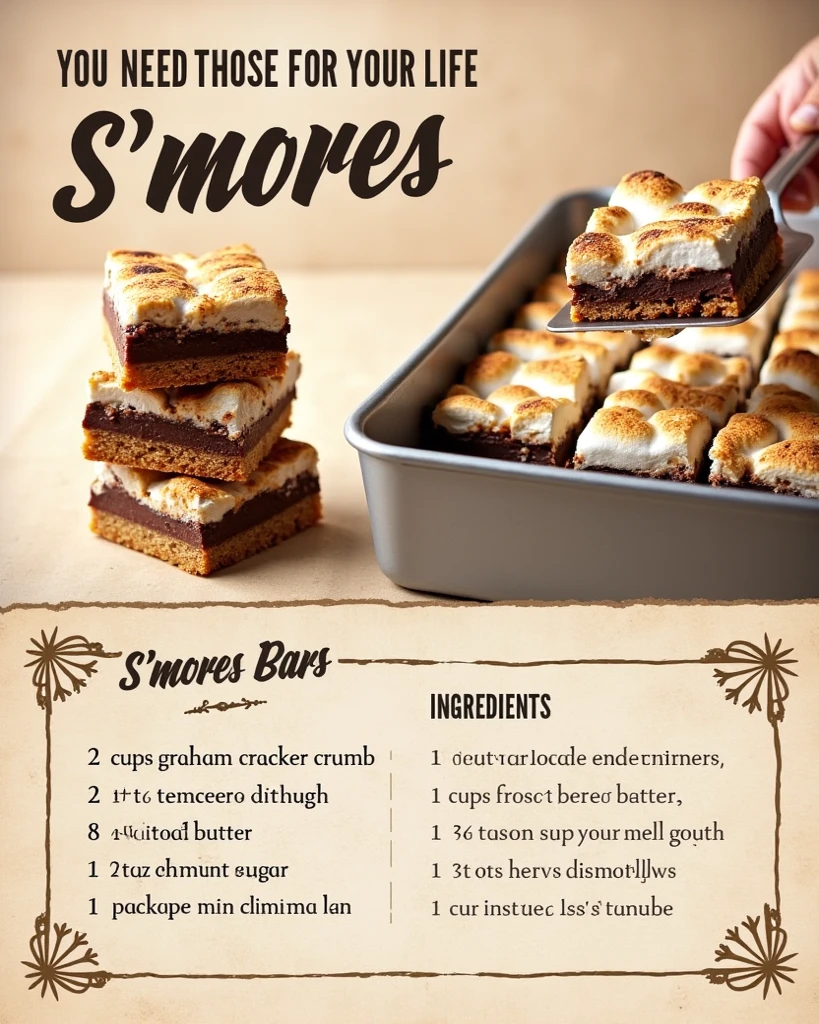
I’ll never forget the first time I made s’mores bars for a summer barbecue. It was one of those sweltering July afternoons when the thought of standing over a campfire seemed unbearable, yet everyone was craving that classic s’mores flavor. These bars were born out of necessity and quickly became the star of the party. Within twenty minutes of setting them out, the entire pan had disappeared, and I had at least five people asking for the recipe.
What makes these s’mores bars so special is how they capture everything we love about traditional s’mores—the crunchy graham cracker, the melted chocolate, the gooey marshmallow—but in a convenient, shareable format. Moreover, they’re incredibly easy to make, requiring no campfire, no skewers, and absolutely no risk of burnt marshmallows. These bars have become my go-to dessert whenever I want something that’s guaranteed to impress without requiring hours in the kitchen.
Why S’mores Bars Are Better Than Traditional S’mores
After making both traditional campfire s’mores and these bars countless times, I’ve developed a strong preference for the bar version in most situations. While nothing quite replaces the experience of making s’mores around a campfire, these bars offer several practical advantages that make them perfect for everyday occasions.
First, the chocolate-to-marshmallow ratio is consistent in every bite of these s’mores bars, unlike traditional s’mores where the chocolate often doesn’t melt completely. Furthermore, the bars are much easier to eat without making a mess—no chocolate sliding out the sides or marshmallow stuck to your fingers. Additionally, you can make these s’mores bars ahead of time and serve them at room temperature, making them ideal for potlucks and parties.
Understanding the Perfect S’mores Bar Construction
Creating the ideal s’mores bars requires understanding how the three main components work together. The graham cracker crust provides the foundation, offering that essential crunchy texture and slightly sweet, honey-flavored base. I’ve experimented with various crust thicknesses and found that a substantial layer is crucial for structural integrity.
The chocolate layer is where these s’mores bars really shine. Using Hershey’s chocolate bars, the traditional s’mores chocolate, creates authentic flavor. However, the key is using enough chocolate to create a generous layer without making the bars overly rich. Meanwhile, the marshmallow topping needs to be perfectly toasted—golden brown on top while remaining soft and gooey underneath.
The Science of Toasting Marshmallows Evenly
Achieving that perfect golden-brown marshmallow top on s’mores bars requires understanding how oven broilers work. Most broilers heat from above, which means the top of your marshmallows will brown faster than you might expect. I’ve learned to watch them constantly during this final step, as the difference between perfectly toasted and burnt happens in just seconds.
Additionally, using mini marshmallows rather than large ones ensures more even coverage and browning. The smaller marshmallows melt together more uniformly, creating that signature s’mores appearance we’re after. Furthermore, they’re easier to arrange in a single layer, preventing gaps in your topping.
Essential Ingredients for Perfect S’mores Bars
For the Graham Cracker Crust:
- 2 cups graham cracker crumbs (about 14-16 full crackers)
- 8-12 tablespoons melted butter
- ½ cup powdered sugar
For the Chocolate Layer:
- 17.6 oz Hershey’s chocolate bars (about 12 regular-sized bars)
For the Marshmallow Topping:
- 1 package mini marshmallows (10 oz)
The beauty of these s’mores bars lies in their simplicity. With just three main components and minimal ingredients, you can create something that tastes incredibly indulgent. Moreover, these are ingredients that most people either have on hand or can easily find at any grocery store.
Selecting Quality Ingredients for S’mores Bars
While the ingredient list is simple, quality matters tremendously in these s’mores bars. I always use actual Hershey’s chocolate bars rather than chocolate chips or generic chocolate because they provide the authentic s’mores flavor everyone expects. The specific taste and texture of Hershey’s milk chocolate is integral to the classic s’mores experience.
For the graham crackers, I prefer using regular honey graham crackers rather than cinnamon or chocolate varieties. The subtle honey sweetness complements the chocolate and marshmallow perfectly. Additionally, I’ve found that crushing graham crackers myself in a food processor yields better texture than buying pre-made crumbs, though both work well for these s’mores bars.
Step-by-Step Instructions for Amazing S’mores Bars
Preparing Your S’mores Bar Foundation
Step 1: Preheat your oven to 350°F (175°C). Line a 9×13-inch baking pan with parchment paper, leaving some overhang on the sides. This overhang will serve as handles for lifting the finished s’mores bars out of the pan, making cutting much easier.
Step 2: Crush your graham crackers into fine crumbs. I do this in a food processor, pulsing until the crackers resemble coarse sand. Alternatively, you can place them in a sealed plastic bag and crush them with a rolling pin. You need about 2 cups of crumbs for these s’mores bars.
Step 3: In a medium bowl, combine the graham cracker crumbs with powdered sugar and mix thoroughly. The powdered sugar adds extra sweetness and helps the crust hold together better than granulated sugar would.
Step 4: Add the melted butter to the crumb mixture, starting with 8 tablespoons. Mix well with a fork until the mixture resembles wet sand. If it seems too dry and won’t hold together when pressed, add more melted butter, one tablespoon at a time, until you achieve the right consistency. The mixture should clump together when squeezed.
Step 5: Press the graham cracker mixture firmly into the bottom of your prepared pan. I use the bottom of a measuring cup or glass to compress it evenly. This compression is crucial for creating a sturdy base that won’t crumble when you cut your s’mores bars.
Step 6: Bake the crust for 8-10 minutes until it’s just beginning to turn golden brown and smells fragrant. This pre-baking step ensures your crust stays crispy even under the chocolate and marshmallow layers. Remove from the oven but leave the oven on.
Building the Perfect Chocolate Layer
Step 7: While the crust is still hot from the oven, immediately begin laying the Hershey’s chocolate bars over the top. Break the bars into individual rectangles and arrange them in a single layer, covering the entire surface. The heat from the crust will begin melting the chocolate.
Step 8: Return the pan to the oven for 3-4 minutes, just until the chocolate softens and becomes glossy. Watch carefully—you want the chocolate soft enough to spread but not so melted that it becomes liquid. This is a critical step for perfect s’mores bars.
Step 9: Remove the pan from the oven and use an offset spatula or the back of a spoon to gently spread the softened chocolate into an even layer, filling any gaps. Work quickly but carefully, as the chocolate will begin to set as it cools.
Creating the Toasted Marshmallow Top
Step 10: While the chocolate is still slightly warm, arrange the mini marshmallows in a single, even layer over the entire surface. Pack them relatively tightly together, as they’ll expand and spread during toasting. This generous marshmallow layer is essential for authentic s’mores bars.
Step 11: Turn your oven to the broil setting and position the rack about 6 inches from the heating element. If your broiler has different settings, use the low or medium setting rather than high for more control.
Step 12: Place the pan under the broiler and watch constantly—this step happens very quickly. The marshmallows will puff up and begin turning golden brown within 1-2 minutes. Rotate the pan if needed for even browning. Remove immediately once you achieve that perfect toasted appearance.
Step 13: Allow the s’mores bars to cool completely at room temperature before cutting. This cooling period is essential—if you cut them while warm, the chocolate will be too soft and the bars will fall apart. I usually let mine cool for at least 2 hours, though refrigerating for 30 minutes speeds up the process.
Step 14: Using the parchment paper overhang as handles, lift the entire slab of s’mores bars out of the pan. Place it on a cutting board and use a large, sharp knife to cut into squares. I wipe the knife clean between cuts for the neatest edges.
Pro Tips for Perfect S’mores Bars Every Time
After making these s’mores bars dozens of times, I’ve discovered several tricks that guarantee success. First, the parchment paper lining is absolutely essential—don’t skip this step. Without it, removing the bars from the pan becomes nearly impossible, and you’ll end up with a delicious mess rather than neat squares.
Moreover, I’ve learned that watching the marshmallows carefully during broiling is crucial. I’ve ruined more than one batch by walking away for just thirty seconds. The marshmallows go from perfectly golden to burnt remarkably quickly. Furthermore, every broiler is different, so the first time you make these s’mores bars, stay close and watch carefully to learn your broiler’s timing.
Achieving the Perfect Crust Texture
The texture of your graham cracker crust can make or break these s’mores bars. Too little butter, and the crust will be dry and crumbly. However, too much butter creates a greasy base that doesn’t support the other layers properly. I’ve found that starting with 8 tablespoons and adding more only if needed produces the best results.
Additionally, pressing the crust firmly and evenly is critical. I spend at least a minute pressing and smoothing, ensuring there are no thin spots. Uneven crust thickness leads to uneven baking and potentially weak spots in your finished s’mores bars.
Nutritional Information for S’mores Bars
Per bar (based on 24 bars):
- Calories: 185
- Total Fat: 9g
- Saturated Fat: 5g
- Cholesterol: 15mg
- Sodium: 95mg
- Total Carbohydrates: 26g
- Sugars: 19g
- Protein: 2g
- Fiber: 1g
While s’mores bars certainly aren’t health food, they’re a reasonable indulgence for special occasions. The portion size is generous enough to satisfy sweet cravings without being overwhelmingly large. Furthermore, because they’re so rich and satisfying, most people find that one bar is plenty.
Serving Suggestions for S’mores Bars
I’ve served these s’mores bars at countless gatherings, and they’re always a hit. They’re perfect at room temperature, which makes them ideal for outdoor events, picnics, and potlucks where refrigeration isn’t available. Moreover, the bars transport beautifully—I simply cut them, stack them with parchment paper between layers, and pack them in an airtight container.
For special presentations, I sometimes drizzle melted chocolate over the cooled bars or dust them lightly with graham cracker crumbs. These simple garnishes make the s’mores bars look even more impressive without adding much work. Additionally, serving them on a rustic wooden board or vintage platter enhances the campfire nostalgia these bars evoke.
Creative Serving Ideas for Special Occasions
For birthday parties, I’ve cut these s’mores bars into larger squares and topped each with a birthday candle, creating individual celebratory treats. Similarly, for Fourth of July parties, I’ve decorated the platter with small American flags. The versatility of these s’mores bars makes them suitable for virtually any occasion.
I also love serving them alongside vanilla ice cream for an extra-special dessert. The cold ice cream contrasts beautifully with the sweet, gooey s’mores bars. Furthermore, pairing them with hot chocolate or coffee creates a comforting dessert experience that guests always remember.
Storing S’mores Bars Properly
Proper storage keeps these s’mores bars fresh and delicious for several days. I store them in an airtight container at room temperature for up to 3 days. The marshmallow topping stays soft and chewy, while the graham cracker crust maintains its pleasant crunch. However, be sure the bars are completely cool before storing to prevent condensation from forming inside the container.
For longer storage, these s’mores bars freeze beautifully. I wrap individual bars in plastic wrap, then place them in a freezer-safe container or bag. They’ll keep frozen for up to 2 months. Additionally, frozen s’mores bars can be eaten straight from the freezer for a different but equally delicious texture, or thawed at room temperature for 30 minutes.
Creative Variations of Classic S’mores Bars
While the classic version is perfect as written, I frequently experiment with variations to keep things interesting. One of my favorite adaptations is adding a layer of peanut butter between the graham cracker crust and chocolate layer. This creates peanut butter cup s’mores bars that combine two beloved flavors.
Another delicious variation involves using different chocolate types. Dark chocolate creates more sophisticated s’mores bars that appeal to adult palates, while white chocolate offers a sweeter, creamier alternative. Furthermore, I’ve made successful versions using cookies and cream chocolate bars for a cookies-and-cream twist.
Seasonal S’mores Bar Adaptations
I love adapting these s’mores bars for different seasons and holidays. During fall, I add cinnamon to the graham cracker crust and use cinnamon graham crackers for a pumpkin spice-inspired version. For Christmas, I’ve made peppermint s’mores bars by using peppermint bark instead of regular chocolate and adding crushed candy canes to the marshmallow topping.
Valentine’s Day calls for strawberry s’mores bars made with strawberry-flavored chocolate and freeze-dried strawberries sprinkled over the marshmallow layer. These seasonal variations keep the basic concept fresh and exciting throughout the year.
Troubleshooting Common S’mores Bar Problems
Over the years, I’ve encountered and solved virtually every s’mores bar problem imaginable. If your crust falls apart when cutting, it likely needed more butter or wasn’t pressed firmly enough. Next time, add an extra tablespoon of butter and really compress that crust layer.
For marshmallows that won’t brown evenly, try positioning your oven rack closer to or farther from the broiler. Additionally, some ovens have hot spots that cause uneven browning. Rotating the pan halfway through broiling helps compensate for this. If your marshmallows burn before browning, your broiler is too hot—try using a lower setting or positioning the rack lower.
Fixing Chocolate Layer Issues
If the chocolate layer is too thin or has gaps, you didn’t use enough chocolate bars. I learned this the hard way and now always buy extra chocolate bars just in case. The chocolate should completely cover the crust with no graham cracker showing through. Additionally, if the chocolate seems too hard to spread, return it to the oven for another minute to soften it further.
Conversely, if your chocolate layer becomes too liquid and runs everywhere, you’ve overheated it. This doesn’t ruin the s’mores bars, but it makes assembly messier. Next time, check the chocolate after 2-3 minutes in the oven and remove it as soon as it’s softened but not fully melted.
Making S’mores Bars for Large Gatherings
I’ve successfully scaled this recipe for parties and events many times. For larger crowds, I make multiple pans rather than doubling the recipe in one pan, as this ensures even baking and easier handling. Two 9×13-inch pans of s’mores bars serve about 48 people generously.
When making multiple batches, I’ve learned to prep all the crusts at once, bake them simultaneously, then move through the chocolate and marshmallow steps assembly-line style. This efficiency makes producing large quantities of s’mores bars much more manageable. Furthermore, recruiting a helper for the broiling step means someone can watch one pan while you monitor the other.
Pairing Beverages with S’mores Bars
The right beverage pairing enhances the s’mores bar experience significantly. I find that cold milk is the classic accompaniment—the creamy, neutral flavor cleanses the palate between bites of these sweet bars. Additionally, the nostalgic pairing of s’mores and milk evokes childhood memories for many people.
For adult gatherings, I often serve s’mores bars alongside dessert wines or coffee liqueurs. A tawny port or ruby port complements the chocolate and caramel notes beautifully. Meanwhile, hot coffee or espresso provides a bitter counterpoint that balances the sweetness. Furthermore, craft stouts or chocolate beers create sophisticated pairings that surprise and delight guests.
The Perfect Occasions for S’mores Bars
These s’mores bars have proven themselves perfect for countless occasions in my experience. They’re ideal for summer barbecues when everyone’s craving s’mores but nobody wants to tend a fire. Moreover, they’re fantastic for children’s birthday parties since kids love them and they’re easy to serve and eat.
I’ve brought s’mores bars to school bake sales, church potlucks, office parties, and family reunions. They travel well, serve a crowd, and appeal to virtually everyone. Additionally, they’re conversation starters—people always want to know how you captured campfire s’mores in bar form.
S’mores Bars for Non-Traditional Settings
Interestingly, these s’mores bars have become popular at events where traditional s’mores would be impossible. I’ve made them for indoor winter parties, graduation celebrations, and even wedding receptions. The familiar flavors evoke happy memories while the convenient format works in any setting.
Furthermore, I’ve packed s’mores bars for hiking trips and camping excursions as a fun twist—bringing s’mores to the campsite in bar form rather than making them there. The irony isn’t lost on anyone, and they’re always appreciated as a convenient, no-mess treat after a long day outdoors.
Teaching Kids to Make S’mores Bars
These s’mores bars are excellent for involving children in the kitchen. The recipe is straightforward enough for kids to follow with supervision, and the familiar ingredients make them feel confident. Moreover, the assembly process—crushing crackers, pressing the crust, arranging chocolate and marshmallows—provides hands-on tasks that keep children engaged.
I always handle the oven work myself when cooking with kids, particularly the broiling step. However, children can participate in every other aspect, learning valuable baking skills while creating something they’re genuinely excited to eat. Additionally, making s’mores bars together creates wonderful family memories and traditions.
My Personal S’mores Bar Philosophy
After years of making these s’mores bars, I’ve come to appreciate how they represent the perfect intersection of nostalgia and practicality. They honor the beloved tradition of campfire s’mores while adapting it for modern life. Moreover, they prove that sometimes the best innovations come from finding new ways to enjoy classic flavors.
What I love most about these s’mores bars is their democratic appeal—I’ve never met anyone who doesn’t enjoy them. They transcend age, dietary preferences (with simple modifications), and occasion types. Furthermore, they’re forgiving enough for beginning bakers while offering opportunities for experienced cooks to get creative with variations.
These bars have taught me that great recipes don’t need to be complicated to be impressive. Sometimes, the simplest combinations of quality ingredients, executed well, create the most memorable treats. The joy on people’s faces when they bite into a perfectly gooey, chocolatey, marshmallowy s’mores bar never gets old, no matter how many times I’ve witnessed it.