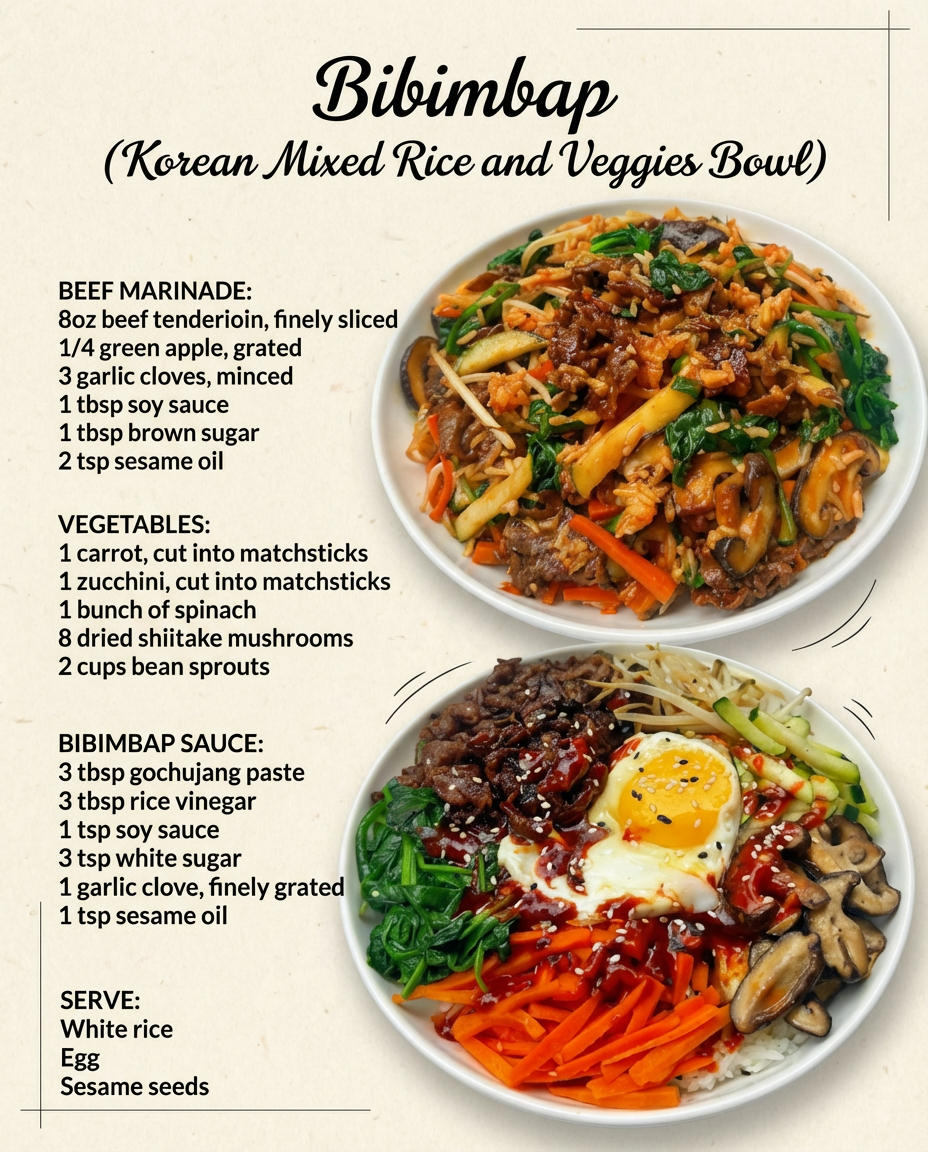
Bibimbap (비빔밥), literally meaning “mixed rice,” is one of the most beloved Korean dishes worldwide. This colorful, flavorful bowl combines steamed white rice with marinated beef, an assortment of seasoned vegetables (namul), a fried egg, and a spicy-sweet gochujang-based sauce. The magic happens when you mix everything together – the textures, temperatures, and flavors create a perfect harmony.
This authentic bibimbap recipe serves 4 people and can be prepared in about 60–75 minutes (including prep). It’s naturally gluten-free (use tamari instead of soy sauce if needed) and highly customizable.
Ingredients
Beef Marinade
- 8 oz (225 g) beef tenderloin or sirloin, very thinly sliced (freeze for 20–30 min to make slicing easier)
- ¼ green apple (or Asian pear), grated
- 3 garlic cloves, minced
- 1 Tbsp soy sauce
- 1 Tbsp brown sugar
- 2 tsp sesame oil
- ¼ tsp black pepper
Vegetables (Namul)
- 1 medium carrot, cut into thin matchsticks
- 1 medium zucchini, cut into thin matchsticks
- 1 bunch fresh spinach (about 8–10 oz / 225–280 g)
- 8 dried shiitake mushrooms, rehydrated and thinly sliced
- 2 cups bean sprouts
- ½ English cucumber, cut into thin matchsticks (optional extra freshness)
Bibimbap Sauce (Gochujang Sauce)
- 3 Tbsp gochujang (Korean red chili paste)
- 3 Tbsp rice vinegar
- 1 Tbsp soy sauce
- 1 Tbsp white sugar
- 1 garlic clove, finely grated or minced
- 1 tsp sesame oil
For Serving
- 4 cups freshly cooked short-grain white rice (sushi rice or Korean rice), kept hot
- 4 fried eggs (sunny-side up with runny yolk)
- 2–3 tsp toasted sesame seeds
- Optional: kimchi on the side
Additional Seasonings for Vegetables
- Sesame oil, garlic, salt, soy sauce (small amounts – see instructions)
Instructions
1. Marinate the Beef
In a bowl, combine grated apple, minced garlic, soy sauce, brown sugar, sesame oil, and black pepper. Add the thinly sliced beef and toss to coat evenly. Cover and refrigerate for at least 20 minutes (up to 2 hours for deeper flavor).
2. Prepare the Vegetables (Namul)
Each vegetable is cooked separately to preserve individual flavor and color.
- Spinach: Blanch in boiling water for 30–45 seconds. Drain, rinse under cold water, squeeze out excess moisture. Season with ½ tsp sesame oil, ½ tsp minced garlic, pinch of salt. Set aside.
- Carrot: Sauté in 1 tsp sesame oil over medium heat for 2–3 minutes until slightly softened but still crisp. Season with pinch of salt.
- Zucchini: Sauté in 1 tsp sesame oil for 2–3 minutes. Season with pinch of salt.
- Bean sprouts: Blanch 1–2 minutes in boiling water, drain, rinse cold. Season with ½ tsp sesame oil, pinch of salt, and ½ tsp minced garlic.
- Shiitake mushrooms: After rehydrating (soak 20–30 min in warm water), slice thinly. Sauté in 1 tsp sesame oil with ½ tsp soy sauce and ½ tsp minced garlic for 3–4 minutes.
- Cucumber (optional): Keep raw, lightly salted, and pat dry.
3. Make the Bibimbap Sauce
Whisk together gochujang, rice vinegar, soy sauce, sugar, grated garlic, and sesame oil until smooth. Adjust sweetness or spiciness to taste. Set aside.
4. Cook the Beef
Heat 1–2 tsp sesame oil in a skillet over medium-high heat. Add marinated beef in a single layer. Stir-fry 2–4 minutes until just cooked through. Remove from heat.
5. Fry the Eggs
Fry 4 eggs sunny-side up in a little oil until whites are set but yolks remain runny.
6. Assemble the Bibimbap Bowls
Divide hot rice among 4 large bowls.
Arrange the cooked vegetables and beef in neat sections on top of the rice (traditional presentation groups ingredients by color).
Place one fried egg in the center of each bowl.
Sprinkle with toasted sesame seeds.
Serve the gochujang sauce on the side or drizzle over the top.
To eat: Mix everything thoroughly – break the egg yolk and stir the sauce through the bowl. The heat from the rice slightly wilts the greens and blends all flavors.
Tips for Success
- Make-ahead: Vegetables and sauce can be prepared 1–2 days in advance. Store separately in the fridge. Reheat beef and rice just before serving.
- Vegetarian version: Replace beef with pan-fried tofu or mushrooms marinated in the same sauce.
- Spice level: Gochujang varies in heat. Start with 2½ Tbsp and add more if you like it spicy.
- Rice: Short-grain white rice is traditional. Brown rice or mixed grains work well too.
- Presentation: Arrange ingredients in a rainbow pattern for the classic look.
Frequently Asked Questions (FAQs)
What does bibimbap mean?
“Bibim” means “mixed” and “bap” means “cooked rice.” So bibimbap = mixed rice.
Can I prepare bibimbap ahead of time?
Yes – prepare all components separately and store in the fridge for up to 2 days. Assemble and reheat rice, beef, and vegetables just before eating. The egg should be fried fresh.
Is bibimbap spicy?
It can be – the heat comes from the gochujang sauce. You control the spice level by adjusting the amount of gochujang.
What can I substitute for gochujang?
There’s no perfect substitute, but a mix of 2 Tbsp miso + 1 Tbsp sriracha + 1 tsp sugar + 1 tsp sesame oil can work in a pinch.
Can I make bibimbap vegetarian or vegan?
Absolutely. Skip the beef and egg, use tofu or mushrooms instead, and replace honey (if used) with maple syrup or sugar.
What rice is best for bibimbap?
Short-grain white rice (sushi rice or Korean rice) is traditional because it’s sticky and holds together well when mixed.
How do I keep vegetables vibrant and separate?
Cook each vegetable separately and season lightly. Arrange them in sections instead of mixing until eating.
Conclusion
Bibimbap is more than just a dish – it’s a complete, balanced meal in one bowl that combines grains, protein, vegetables, and bold Korean flavors. The contrast between the hot rice, cool vegetables, runny egg yolk, and spicy-sweet gochujang sauce makes every bite exciting.
Whether you’re cooking for your family, meal-prepping lunches, or introducing someone to Korean cuisine, this authentic bibimbap recipe is approachable yet impressive. Once you master the basic technique, feel free to experiment with different vegetables, proteins, or sauce levels.
Try making bibimbap this week – it’s a fun, interactive meal that everyone can customize at the table. Which topping or variation are you most excited to try? Let me know in the comments!