The Night Everything Changed in My Kitchen
I’ll never forget the evening my daughter came home from college and announced she was “completely obsessed” with Asian noodle dishes. She’d been living off ramen and stir-fry noodles from the campus food court, and now she wanted to recreate those flavors at home. As someone who’d always been intimidated by Asian cooking, thinking it required exotic ingredients and complicated techniques, I was hesitant. But that night, I decided to face my fears and dive into the world of Asian-inspired noodles.
What I discovered changed everything. These dishes weren’t complicated at all—they were actually some of the easiest, fastest, and most satisfying meals I’d ever made. Better yet, they used mostly pantry staples and took less time than ordering takeout. Now, these four Asian noodle recipes have become our family’s go-to solutions for busy weeknights, last-minute dinners, and those times when we’re craving something bold and flavorful.
This collection of Asian Inspired Noodles – 4 Ways represents the best of what Asian-inspired home cooking can be: quick, affordable, incredibly flavorful, and endlessly adaptable. Whether you’re a college student cooking in a dorm, a busy parent feeding a family, or someone who just loves good noodles, these recipes will become your new favorites.
Understanding Asian Noodle Cooking
Before we dive into the recipes, let’s talk about what makes Asian noodle dishes so special. Unlike Italian pasta, which often features cream or tomato-based sauces, Asian noodles typically showcase bold, balanced flavors—sweet, salty, savory, spicy, and umami all dancing together in perfect harmony.
The beauty of these Asian inspired noodles recipes is their versatility. You can use whatever protein you have on hand, swap vegetables based on what’s in your fridge, and adjust the spice level to your preference. The sauces are where the magic happens—combinations of soy sauce, sesame oil, garlic, ginger, and other aromatics create layers of flavor that make every bite exciting.
These four recipes represent different flavor profiles and cooking techniques, but they all share one thing: they’re designed for real home cooks with real time constraints and real budgets. No hard-to-find ingredients, no complicated techniques, just delicious food that comes together quickly.
Recipe 1: Mongolian Beef Noodles
The Sweet and Savory Classic
Mongolian Beef Noodles are the perfect introduction to Asian-inspired cooking. The sauce is a beautiful balance of sweet brown sugar and savory soy sauce, with aromatic garlic and ginger adding depth and warmth. Despite being an American-Chinese restaurant staple, this dish is incredibly easy to make at home.
Ingredients for Mongolian Beef Noodles:
For the Beef:
- 1.5 pounds ground beef (or thinly sliced flank steak)
- 2 tablespoons vegetable oil
- 6 cloves garlic, minced
- 2 tablespoons fresh ginger, minced
- ½ teaspoon red pepper flakes
For the Sauce:
- ½ cup soy sauce
- ½ cup water
- ⅓ cup brown sugar
- 2 tablespoons hoisin sauce
- 1 tablespoon rice vinegar
- 1 tablespoon sesame oil
- 2 teaspoons cornstarch mixed with 2 tablespoons water
For the Noodles:
- 12 ounces Asian noodles (lo mein, udon, or rice noodles)
- 4 green onions, cut into 2-inch pieces
- 2 green onions, sliced for garnish
- Sesame seeds for garnish
Instructions for Mongolian Beef Noodles:
Cook your noodles according to package directions and set aside. In a large wok or skillet, heat oil over high heat and brown the ground beef, breaking it apart as it cooks. If using sliced steak, cook for 2-3 minutes per side. Push the meat to the sides and add garlic, ginger, and red pepper flakes to the center, cooking until fragrant (about 1 minute).
Mix together the soy sauce, water, brown sugar, hoisin sauce, rice vinegar, and sesame oil. Pour this sauce over the beef and bring to a boil. Add the cornstarch slurry and stir constantly for 1-2 minutes until the sauce thickens and becomes glossy.
Add the green onion pieces and cook for 1 minute, then toss in the cooked noodles. Mix everything together until the noodles are completely coated in that gorgeous, sticky sauce. Garnish with sliced green onions and sesame seeds. The finished dish should be glossy, with the sauce clinging to every strand of noodle.
Recipe 2: Chicken Ramen Stir Fry
The College Student’s Dream Elevated
This Chicken Ramen Stir Fry takes instant ramen—yes, those 25-cent packages—and transforms them into a restaurant-quality meal. By discarding the flavor packet and creating your own sauce, you get all the convenience of ramen with none of the sodium overload, plus the addition of real protein and vegetables.
Ingredients for Chicken Ramen Stir Fry:
For the Chicken:
- 1.5 pounds boneless, skinless chicken breasts, cut into bite-sized pieces
- 2 tablespoons vegetable oil
- Salt and pepper to taste
- 1 teaspoon garlic powder
For the Stir Fry:
- 4 packages instant ramen noodles (discard seasoning packets)
- 2 cups broccoli florets
- 1 red bell pepper, sliced
- 1 cup snap peas or green beans
- 4 cloves garlic, minced
- 1 tablespoon fresh ginger, minced
For the Sauce:
- ¼ cup soy sauce
- 2 tablespoons oyster sauce
- 2 tablespoons rice vinegar
- 1 tablespoon sesame oil
- 1 tablespoon honey
- 1 teaspoon sriracha (or to taste)
- 2 teaspoons cornstarch
Instructions for Chicken Ramen Stir Fry:
Cook the ramen noodles according to package directions (but don’t use those seasoning packets!). Drain and rinse with cold water to stop the cooking. Toss with a tiny bit of sesame oil to prevent sticking.
In a small bowl, whisk together all sauce ingredients and set aside. Heat oil in a large wok or skillet over high heat. Season chicken with salt, pepper, and garlic powder, then cook for 5-7 minutes until golden brown and cooked through. Remove and set aside.
In the same pan, add the broccoli and a splash of water. Cover and steam for 2-3 minutes. Add bell pepper and snap peas, cooking for another 2 minutes. Push vegetables to the side, add garlic and ginger to the center, and cook for 30 seconds until fragrant.
Return the chicken to the pan, pour in the sauce, and bring to a boil. The sauce will thicken quickly. Add the cooked ramen noodles and toss everything together for 2-3 minutes until the noodles are heated through and coated in sauce. The result is a colorful, veggie-packed stir fry that looks as good as it tastes.
Recipe 3: Garlic Sesame Noodles
The Minimalist’s Masterpiece
Sometimes the simplest recipes are the most addictive. These Garlic Sesame Noodles prove that you don’t need a long ingredient list to create something incredibly delicious. With just a handful of pantry staples, you can make noodles so good you’ll want to eat them straight from the pan.
Ingredients for Garlic Sesame Noodles:
For the Noodles:
- 1 pound spaghetti or Asian noodles
- Salt for pasta water
For the Sauce:
- 6 tablespoons soy sauce
- 3 tablespoons tahini (or peanut butter)
- 2 tablespoons sesame oil
- 2 tablespoons rice vinegar
- 2 tablespoons brown sugar
- 1 tablespoon chili garlic sauce (or to taste)
- 6 cloves garlic, minced
- 1 tablespoon fresh ginger, minced
For Garnish:
- 4 green onions, thinly sliced
- 2 tablespoons sesame seeds, toasted
- Fresh cilantro (optional)
- Crushed red pepper flakes
Instructions for Garlic Sesame Noodles:
Cook your noodles according to package directions until al dente. Before draining, reserve 1 cup of the cooking water. Drain the noodles and return them to the pot.
While the noodles cook, prepare the sauce. In a medium bowl, whisk together the soy sauce, tahini (or peanut butter—it creates a creamier texture), sesame oil, rice vinegar, brown sugar, and chili garlic sauce. Whisk vigorously until the tahini is completely incorporated and the sauce is smooth.
In a small skillet, heat a tablespoon of vegetable oil over medium heat. Add the minced garlic and ginger, cooking for about 1 minute until fragrant but not browned. Immediately pour this aromatic oil into your sauce mixture and whisk to combine.
Pour the sauce over the cooked noodles and toss to coat thoroughly. If the sauce seems too thick, add reserved pasta water a few tablespoons at a time until you reach your desired consistency. The noodles should be glossy and well-coated but not swimming in sauce.
Serve immediately, garnished generously with sliced green onions, toasted sesame seeds, fresh cilantro, and red pepper flakes. These noodles are excellent warm, at room temperature, or even cold from the fridge—making them perfect for meal prep or packed lunches.
Recipe 4: Potsticker Noodle Bowl
The Ultimate Comfort Bowl
This Potsticker Noodle Bowl is what happens when you combine the best elements of soup, stir-fry, and dumplings into one incredible dish. It’s hearty, warming, and packed with flavor—the kind of meal that makes you feel taken care of. The genius here is using frozen potstickers, which makes this feel fancy while being incredibly easy.
Ingredients for Potsticker Noodle Bowl:
For the Bowl:
- 20-24 frozen potstickers (pork, chicken, or vegetable)
- 12 ounces fresh or dried noodles (ramen, udon, or rice noodles)
- 1 pound ground pork or ground chicken
- 2 tablespoons vegetable oil
- 4 cups chicken broth
- 2 cups water
For the Flavor Base:
- 6 cloves garlic, minced
- 2 tablespoons fresh ginger, minced
- 3 tablespoons soy sauce
- 1 tablespoon sesame oil
- 1 tablespoon rice vinegar
- 1 teaspoon sugar
For the Vegetables:
- 2 cups shredded cabbage or bok choy
- 1 cup shredded carrots
- 1 red bell pepper, thinly sliced
- 4 green onions, sliced
For Garnish:
- Soft-boiled eggs (optional)
- Fresh cilantro
- Chili oil or sriracha
- Lime wedges
Instructions for Potsticker Noodle Bowl:
Start by cooking your ground pork or chicken in a large pot or Dutch oven with vegetable oil over medium-high heat. Break it apart as it cooks, browning it for about 5-7 minutes. Add the garlic and ginger, cooking for another minute until fragrant.
Pour in the chicken broth and water. Add the soy sauce, sesame oil, rice vinegar, and sugar. Bring this to a boil, then reduce to a simmer. This broth is going to be the flavorful base that ties everything together.
Add the frozen potstickers directly to the simmering broth. Don’t thaw them first—they’ll cook perfectly in the hot liquid. Simmer for 5-7 minutes until the potstickers are cooked through and floating.
Add your noodles to the pot and cook according to package directions (usually 3-5 minutes). In the last 2 minutes of cooking, add the shredded cabbage, carrots, and bell pepper. They should wilt slightly but still have some crunch.
To serve, use tongs to divide the noodles among bowls. Add several potstickers to each bowl, then ladle the broth and vegetables over everything. Top with sliced green onions, a soft-boiled egg (cut in half to show that gorgeous jammy yolk), fresh cilantro, a drizzle of chili oil, and a lime wedge on the side.
The beauty of this dish is that every spoonful is different—sometimes you get noodles and broth, sometimes a potsticker bursts in your mouth, sometimes you get a perfect bite of all the components together. It’s a complete, satisfying meal in a bowl.
Visual Description of Asian Inspired Noodles – 4 Ways
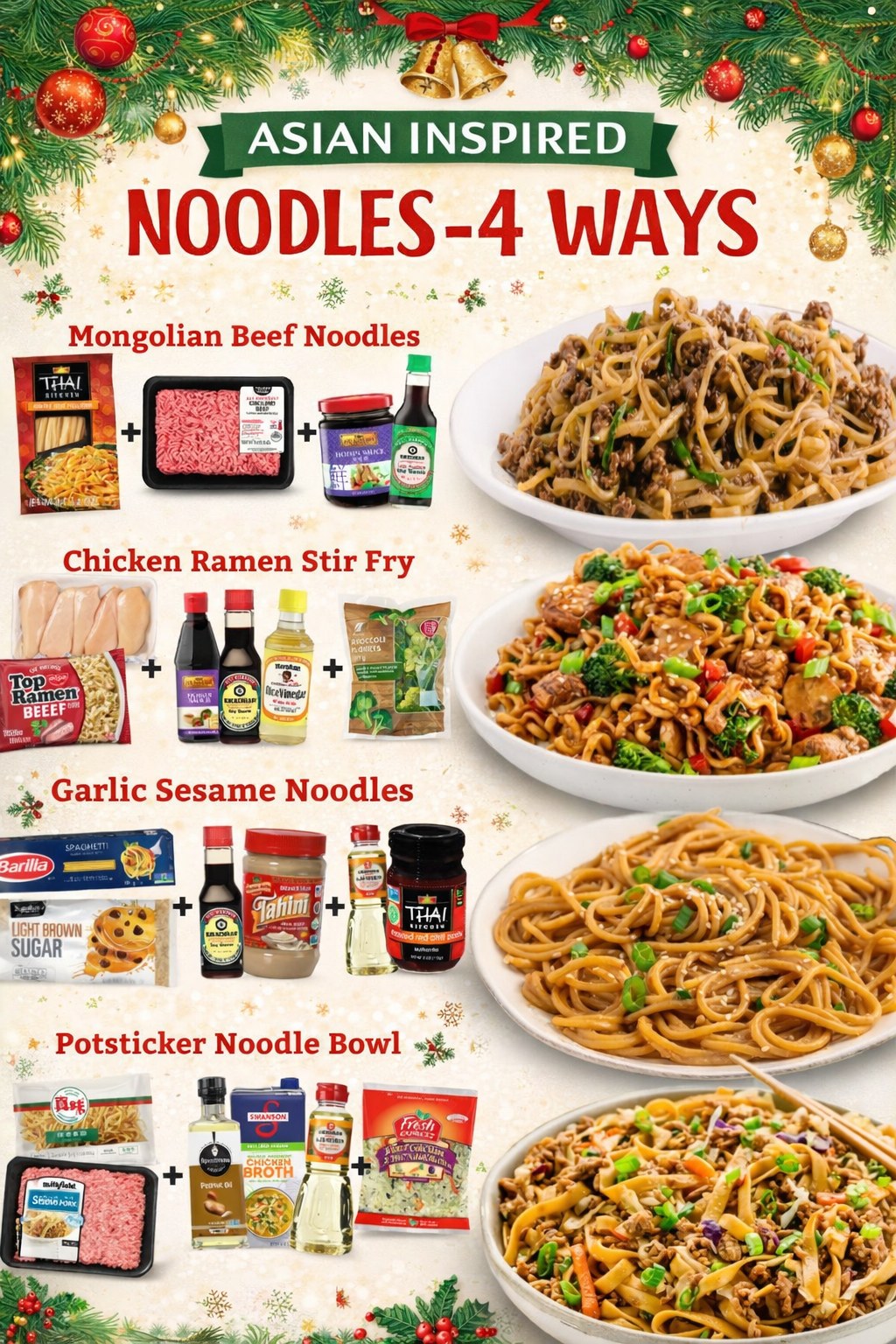
This collection showcases four distinctly beautiful noodle dishes, each with its own visual appeal. The Mongolian Beef Noodles are dark and glossy, with the caramel-colored sauce coating golden noodles and specks of green onion throughout. The Chicken Ramen Stir Fry is a riot of color—bright green broccoli, red bell peppers, and golden chicken pieces all nestled in curly ramen noodles. The Garlic Sesame Noodles are elegant in their simplicity, pale tan noodles glistening with sesame oil and dotted with toasted sesame seeds. The Potsticker Noodle Bowl is a complete composition in a bowl—soft noodles, plump dumplings, colorful vegetables, and a soft-boiled egg with its golden yolk all sitting in aromatic broth. Together, these four dishes represent the beautiful diversity of Asian-inspired noodle cooking, presented with festive Christmas decorations framing each recipe.
Nutritional Comparison of the Four Recipes
Each of these Asian inspired noodles recipes offers different nutritional benefits:
Mongolian Beef Noodles (per serving):
- Calories: 520-560
- Protein: 32g
- Carbs: 58g
- Fat: 18g
- High in protein and iron from beef
Chicken Ramen Stir Fry (per serving):
- Calories: 420-460
- Protein: 35g
- Carbs: 48g
- Fat: 12g
- High in vitamins A and C from vegetables
Garlic Sesame Noodles (per serving):
- Calories: 380-420
- Protein: 12g
- Carbs: 52g
- Fat: 15g
- Good source of healthy fats from sesame oil and tahini
Potsticker Noodle Bowl (per serving):
- Calories: 480-520
- Protein: 28g
- Carbs: 56g
- Fat: 16g
- Well-balanced with protein, vegetables, and warming broth
All four recipes can be modified to increase vegetables, reduce sodium (use low-sodium soy sauce), or accommodate dietary restrictions (gluten-free noodles, vegetarian proteins).
Presentation Tips for Asian Noodle Dishes
The presentation of Asian noodle dishes can elevate them from everyday meals to something special:
For Individual Servings: Use shallow, wide bowls for stir-fried noodles to show off all the ingredients. Use deeper bowls for the Potsticker Noodle Bowl to contain the broth. Chopsticks and a soup spoon make the experience more authentic and fun.
Garnish Matters: Fresh herbs (cilantro, Thai basil, mint), sliced green onions, toasted sesame seeds, and lime wedges add color, freshness, and the opportunity for each person to customize their bowl.
Temperature Considerations: Serve these dishes hot from the pan. Asian noodles tend to absorb sauce as they sit, so if you’re not serving immediately, reserve some sauce on the side to toss in just before eating.
Family-Style Service: For casual meals, serve the noodles in a large serving bowl or directly from the wok, with garnishes and condiments (sriracha, soy sauce, chili oil) on the side for customization.
Perfect Pairings and Accompaniments
These Asian inspired noodles dishes pair beautifully with various sides and beverages:
Appetizers: Spring rolls, edamame, cucumber salad, or pot stickers (beyond the ones in the noodle bowl) make excellent starters. A simple miso soup complements any of these noodle dishes.
Sides: Steamed bok choy, stir-fried green beans, or Asian slaw add extra vegetables. Fried rice works for those with bigger appetites, though these noodle dishes are quite filling on their own.
Beverages: Green tea (hot or iced) is traditional and cleansing. Beer, particularly Asian lagers or wheat beers, pairs well. For wine, try off-dry Riesling or Gewürztraminer, which can handle the bold flavors. Ginger ale or sparkling water with lime are great non-alcoholic options.
Desserts: Keep it light after these filling noodle dishes—fresh fruit, mango sticky rice, or fortune cookies with green tea ice cream are perfect endings.
Tips for Success with Asian Noodles
Prep Everything First (Mise en Place): Asian cooking happens fast, especially stir-fries. Have all ingredients chopped, measured, and ready before you start cooking. This is crucial for success.
Use High Heat: Most Asian noodle stir-fries require high heat for that characteristic “wok hei” or breath of the wok flavor. Don’t be afraid of a hot pan.
Don’t Overcook the Noodles: Cook noodles just until al dente. They’ll continue cooking when you toss them with the hot sauce, and overcooked noodles become mushy.
Balance Your Flavors: Asian cuisine is all about balance—sweet, salty, sour, spicy, and umami. Taste your sauce before adding it to the noodles and adjust as needed.
Control the Sauce: The sauce should coat the noodles, not pool at the bottom. Start with less sauce than you think you need—you can always add more.
Fresh Aromatics Matter: Fresh garlic and ginger make a huge difference. The jarred versions can work in a pinch, but fresh is always better.
Ingredient Substitutions and Variations
The beauty of these Asian inspired noodles recipes is their flexibility:
Noodle Substitutions:
- Lo mein, udon, ramen, rice noodles, soba, or even spaghetti all work
- For low-carb: zucchini noodles, shirataki noodles, or cauliflower rice
- For gluten-free: rice noodles or certified gluten-free noodles
Protein Variations:
- Swap beef for turkey, pork, or lamb
- Use chicken thighs instead of breasts for more flavor
- Tofu, tempeh, or edamame for vegetarian versions
- Shrimp or other seafood cook quickly and work beautifully
Vegetable Flexibility:
- Use whatever vegetables you have: mushrooms, zucchini, carrots, snow peas, baby corn, water chestnuts
- Frozen vegetable stir-fry mixes are convenient and work well
- Add leafy greens (spinach, bok choy, kale) in the last minute of cooking
Sauce Modifications:
- Reduce sugar for less sweetness
- Increase chili sauce or add fresh chilies for more heat
- Add peanut butter for a Thai-inspired flavor
- Coconut milk creates a creamier, richer sauce
Storage and Meal Prep Tips
These Asian noodle dishes are excellent for meal prep:
Refrigerator Storage: Store in airtight containers for up to 4 days. The noodles will absorb sauce as they sit, so reserve a bit of extra sauce to toss in when reheating.
Freezing: The Mongolian Beef and Chicken Ramen Stir Fry freeze reasonably well for up to 2 months. The Garlic Sesame Noodles and Potsticker Noodle Bowl are best enjoyed fresh, as noodles can become mushy when frozen.
Reheating Tips: Reheat in a skillet over medium heat with a splash of water or broth to rehydrate the noodles. Microwave reheating works but can make noodles rubbery—use 30-second intervals and stir between each.
Meal Prep Strategy: Cook the protein and sauce ahead of time, store separately, then cook fresh noodles and vegetables when ready to eat. This keeps everything fresh while still saving time.
Lunch Box Tips: These noodles are excellent cold or at room temperature, making them perfect for packed lunches. Pack garnishes separately to add freshness.
Frequently Asked Questions
Can I make these dishes vegetarian or vegan? Yes! Use tofu, tempeh, or extra vegetables in place of meat. For the sauces, ensure your hoisin and other condiments are vegan (some contain fish sauce or animal products). Replace oyster sauce with mushroom oyster sauce.
What if I don’t have a wok? A large skillet or sauté pan works perfectly. The key is using high heat and not overcrowding the pan. If necessary, cook in batches.
How spicy are these dishes? As written, they’re mild to moderately spicy. You control the heat by adjusting the amount of red pepper flakes, sriracha, or chili oil. Start with less and add more at the table.
Can I use different types of soy sauce? Yes, but be mindful that dark soy sauce is sweeter and thicker than light soy sauce. Low-sodium soy sauce is recommended for health reasons and because you can always add more salt, but you can’t remove it.
Why are my noodles clumping together? This usually happens when noodles sit without being tossed with oil. After draining cooked noodles, toss them with a small amount of sesame or vegetable oil to prevent sticking.
Can I make these dishes ahead for a party? The Garlic Sesame Noodles work well at room temperature and can be made 2-3 hours ahead. The other dishes are best served immediately but can be kept warm in a low oven for up to 30 minutes.
Cost Comparison: Homemade vs. Takeout
One of the best things about these Asian inspired noodles recipes is how budget-friendly they are:
Mongolian Beef Noodles:
- Homemade: $12-15 (serves 4-6) = $2.50-3 per serving
- Takeout: $40-50 for equivalent portions = $8-10 per serving
Chicken Ramen Stir Fry:
- Homemade: $8-12 (serves 4) = $2-3 per serving
- Takeout: $35-45 = $8-11 per serving
Garlic Sesame Noodles:
- Homemade: $6-8 (serves 4) = $1.50-2 per serving
- Takeout: $30-40 = $7.50-10 per serving
Potsticker Noodle Bowl:
- Homemade: $15-18 (serves 4) = $3.75-4.50 per serving
- Takeout: $45-55 = $11-14 per serving
Making these dishes at home saves an average of $20-30 per meal while providing more food and often healthier ingredients. Over a month, that’s a savings of $80-120!
Time Investment: Quick Cooking Breakdown
Each recipe is designed for speed:
- Mongolian Beef Noodles: 20-25 minutes total
- Prep: 10 minutes
- Cook: 12-15 minutes
- Chicken Ramen Stir Fry: 25-30 minutes total
- Prep: 12 minutes
- Cook: 15-18 minutes
- Garlic Sesame Noodles: 15-20 minutes total
- Prep: 5 minutes
- Cook: 10-15 minutes
- Potsticker Noodle Bowl: 25-30 minutes total
- Prep: 8 minutes
- Cook: 17-22 minutes
All four recipes are faster than waiting for delivery and infinitely more satisfying!
Conclusion: Your Asian Noodle Adventure Awaits
These Asian Inspired Noodles – 4 Ways have transformed how my family thinks about weeknight dinners. What started as intimidation about cooking Asian food has become excitement about which noodle dish we’ll make next. These recipes have taught me that you don’t need to be a professional chef or have a pantry full of exotic ingredients to create restaurant-quality Asian noodles at home.
Each of these four recipes brings something different to the table. The Mongolian Beef Noodles satisfy that craving for sweet-savory comfort food. The Chicken Ramen Stir Fry proves that instant ramen can be elevated into something nutritious and delicious. The Garlic Sesame Noodles show that simplicity can be extraordinary. And the Potsticker Noodle Bowl delivers that complete, warming, hug-in-a-bowl experience we all need sometimes.
What I love most about these recipes is how they’ve brought my family together. We’ve made trying new noodle variations into a family activity—everyone gets to suggest ingredients, help with prep, and customize their own bowl. Even my pickiest eater has found versions he loves, and my college student daughter now makes these in her dorm room.
These Asian inspired noodles represent more than just recipes—they’re a gateway to exploring new flavors, gaining confidence in the kitchen, and proving that homemade food can be fast, affordable, and absolutely delicious. Whether you’re a cooking novice or an experienced home chef, these four recipes will earn a permanent place in your meal rotation.
My Personal Cooking Tip: The secret to mastering Asian noodle dishes is understanding that the sauce is everything. Take the time to taste your sauce before adding it to the noodles—it should be perfectly balanced and slightly more intense than you want the final dish to be, because the noodles will dilute it. Also, never walk away from the stove when cooking these dishes. The high heat means things happen fast, and staying present ensures you catch that perfect moment when everything comes together. Finally, don’t be afraid to experiment. Once you’ve made each recipe as written, start playing with the proportions, trying new vegetables, adjusting the spice level. The best version of these recipes will be the one you’ve customized to your family’s tastes. That’s when cooking transforms from following instructions to creating something truly your own.