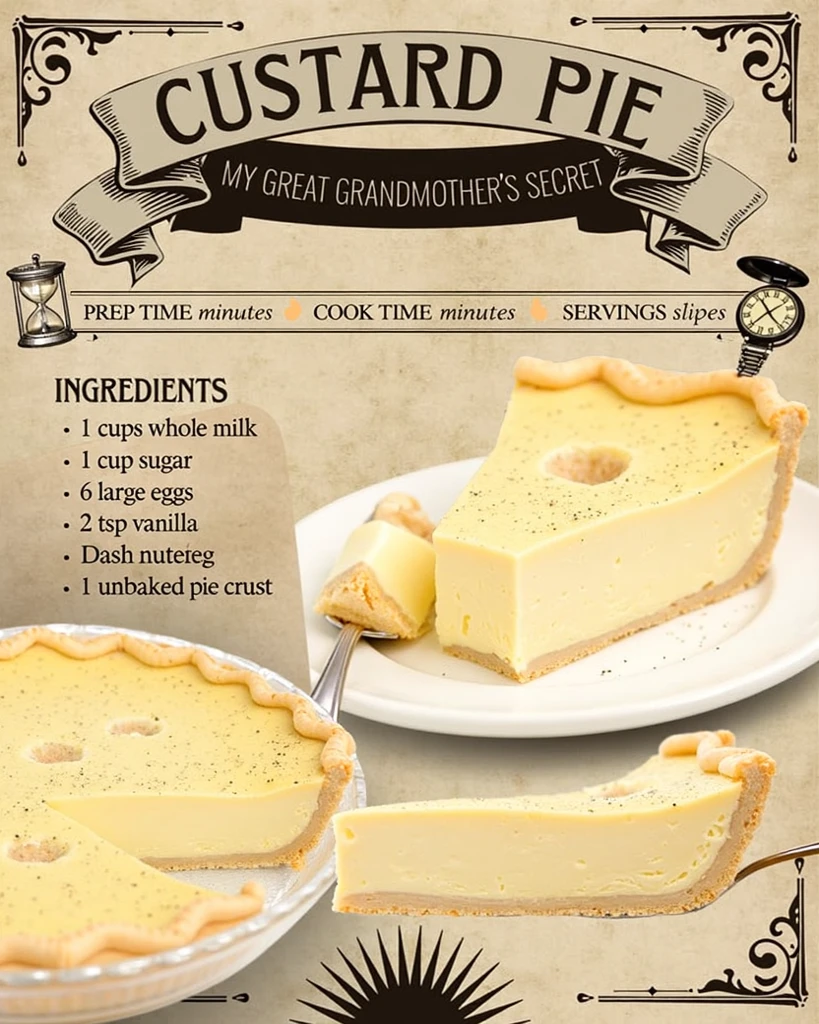
There’s something magical about a recipe that has been passed down through generations. My great grandmother’s custard pie is one of those treasures—a simple, elegant dessert that has graced our family table for nearly a century. I still remember the first time I watched her make it, her weathered hands moving with practiced confidence as she whisked eggs and milk together, the kitchen filling with the warm scent of vanilla and nutmeg. That pie, with its silky smooth filling and perfectly golden crust, became my introduction to the art of traditional baking.
What makes this custard pie truly special isn’t just its incredible taste, but how remarkably easy it is to prepare. Moreover, with just a handful of basic ingredients and less than an hour of work, you can create a dessert that tastes like it came from a high-end bakery. Additionally, this recipe has never failed me, whether I’m baking for a holiday gathering or simply craving a comforting slice with my afternoon coffee.
Why This Custard Pie Recipe Works Every Time
I’ve made this custard pie at least fifty times over the years, and it has consistently delivered perfect results. The secret lies in the simplicity of the ingredients and the gentle baking method. Unlike many modern recipes that complicate things with unnecessary additions, this traditional custard pie relies on the pure flavors of milk, eggs, sugar, and vanilla to create something truly sublime.
Furthermore, the texture is what sets this pie apart from others I’ve tried. The filling sets to a delicate, creamy consistency that holds its shape when sliced but melts on your tongue. Meanwhile, the light dusting of nutmeg on top adds just enough warmth and complexity without overwhelming the delicate custard flavor.
Understanding the Perfect Custard Pie Filling
Creating the ideal custard pie filling is all about balance and technique. After years of making this recipe, I’ve learned that the ratio of eggs to milk is crucial. Too many eggs, and your custard pie becomes dense and rubbery. However, too few eggs, and it won’t set properly, leaving you with a soupy mess.
This recipe uses six large eggs to three cups of whole milk, which creates that perfect custard consistency we’re after. The whole milk is non-negotiable here—I’ve tried making custard pie with lower-fat milk, and the results simply don’t compare. The fat content in whole milk contributes to the rich, velvety texture that makes this dessert so irresistible.
The Role of Temperature in Custard Pie Success
Temperature control is perhaps the most critical factor when baking a custard pie. I always preheat my oven thoroughly and bake at exactly 350°F (175°C). If your oven runs hot, consider reducing the temperature slightly, as custard is delicate and can easily overcook.
Additionally, I’ve found that starting with room-temperature ingredients helps the custard pie bake more evenly. I take my eggs and milk out of the refrigerator about thirty minutes before I begin. This simple step prevents the custard from taking too long to heat through, which can result in an overcooked crust and undercooked center.
Essential Ingredients for Great Grandmother’s Custard Pie
For the Custard Filling:
- 3 cups whole milk
- 1 cup granulated sugar
- 6 large eggs
- 2 teaspoons pure vanilla extract
- Dash of ground nutmeg
- 1 unbaked 9-inch pie crust
The beauty of this custard pie lies in its simplicity. Every ingredient serves a specific purpose, and there’s no room for substitutions if you want authentic results. However, I’ll share some variations later for those who want to experiment.
Selecting the Best Pie Crust for Custard Pie
While I sometimes make my own pie crust from scratch, I’ve also had excellent results with high-quality store-bought versions. The key is choosing an unbaked crust that’s sturdy enough to hold the liquid custard filling without becoming soggy. When making custard pie, I prefer a traditional butter-based crust rather than one made with shortening, as it complements the rich filling beautifully.
Step-by-Step Instructions for Perfect Custard Pie
Preparing Your Custard Pie for Baking
Step 1: Preheat your oven to 350°F (175°C). This is crucial for custard pie success, so don’t skip the preheating step.
Step 2: Place your unbaked pie crust in a 9-inch pie pan. I like to crimp the edges decoratively, but a simple pressed edge works just as well for this custard pie.
Step 3: In a large mixing bowl, whisk together the eggs and sugar until well combined. You don’t need to beat them until fluffy—just mix until the sugar begins to dissolve and the mixture is uniform.
Step 4: Add the whole milk and vanilla extract to the egg mixture. Whisk gently but thoroughly, ensuring everything is well incorporated. I always use a balloon whisk for this step when making custard pie, as it helps prevent lumps.
Step 5: Pour the custard mixture through a fine-mesh strainer into the unbaked pie crust. This extra step removes any chalazae (the stringy egg bits) and ensures your custard pie has a perfectly smooth texture.
Step 6: Sprinkle a light dusting of nutmeg over the top of the custard. I use fresh-grated nutmeg when possible, as it has a more vibrant flavor than pre-ground.
Baking Your Custard Pie to Perfection
Step 7: Carefully transfer the custard pie to the preheated oven. I’ve learned to do this by placing the pie pan on the oven rack first, then pouring in the custard mixture. This method prevents spills and ensures you can fill it right to the top.
Step 8: Bake for 45 minutes, or until the custard is set around the edges but still has a slight jiggle in the center. This is the tricky part of custard pie baking—you want it just barely set, as it will continue cooking from residual heat after you remove it from the oven.
Step 9: Remove the custard pie from the oven and let it cool on a wire rack for at least 2 hours before slicing. Patience is essential here. I know it’s tempting to cut into it right away, but cutting warm custard pie will result in a messy slice that doesn’t hold its shape.
Pro Tips for Custard Pie Success
After making this custard pie countless times, I’ve discovered several tricks that guarantee success. First, always place your custard pie on the center rack of your oven for even heat distribution. Second, resist the urge to open the oven door during baking, as temperature fluctuations can cause the custard to crack.
Moreover, if you notice the crust browning too quickly around the edges while your custard pie is still baking, cover those areas with aluminum foil. This has saved many of my pies from having overly dark, bitter-tasting crusts.
Testing Doneness in Custard Pie
The “jiggle test” is your best friend when baking custard pie. Gently shake the pie—the edges should be completely set, while the center should wobble slightly like firm gelatin. Furthermore, if you insert a knife about an inch from the center, it should come out clean. The very center may seem underdone, but remember that carryover cooking will finish the job.
Nutritional Information for Custard Pie
Per slice (based on 8 servings):
- Calories: 285
- Total Fat: 12g
- Saturated Fat: 6g
- Cholesterol: 165mg
- Sodium: 180mg
- Total Carbohydrates: 36g
- Sugars: 26g
- Protein: 8g
- Calcium: 15% DV
- Vitamin D: 10% DV
While custard pie isn’t exactly a health food, it does provide decent amounts of protein and calcium from the milk and eggs. I consider it a worthwhile indulgence, especially when made with quality ingredients.
Serving and Presentation Ideas for Custard Pie
I’ve served this custard pie at everything from casual weeknight dinners to Thanksgiving celebrations, and it always receives rave reviews. The simplicity of the dessert allows you to dress it up or down depending on the occasion.
For everyday serving, I simply slice the custard pie into eight equal portions and serve it at room temperature or slightly chilled. However, for special occasions, I like to add a dollop of freshly whipped cream and a light dusting of cinnamon. The contrast between the cool cream and the smooth custard is absolutely delightful.
Storing Your Custard Pie Properly
Custard pie must be refrigerated due to its dairy and egg content. I cover mine loosely with plastic wrap or foil and store it in the refrigerator for up to three days. The pie actually tastes even better the next day, as the flavors have had time to meld together beautifully. Additionally, always let refrigerated custard pie sit at room temperature for about 15 minutes before serving for the best flavor.
Delicious Variations of Classic Custard Pie
While the traditional recipe is perfect as written, I occasionally enjoy experimenting with variations of this custard pie. Here are some of my favorite adaptations that still honor the spirit of the original recipe.
Coconut Custard Pie Variation
Replace half a cup of the milk with coconut milk and add a half cup of sweetened shredded coconut to the custard mixture. This creates a tropical twist on the classic custard pie that’s perfect for summer gatherings.
Maple Custard Pie Alternative
Substitute half of the granulated sugar with pure maple syrup for a deeper, more complex flavor profile. This version of custard pie pairs wonderfully with autumn meals and holiday dinners.
Chocolate Custard Pie Option
For chocolate lovers, add a third of a cup of Dutch-process cocoa powder to the sugar before whisking it with the eggs. This transforms the traditional custard pie into a rich, chocolate version that’s equally delicious.
Perfect Pairings for Custard Pie
When serving custard pie for dessert, I’ve found that it pairs beautifully with a variety of beverages. A cup of freshly brewed coffee with a hint of cream complements the sweetness perfectly. Alternatively, a glass of dessert wine like Moscato or late-harvest Riesling elevates the custard pie experience to something truly special.
Furthermore, this dessert works wonderfully as part of a dessert spread alongside fruit pies or tarts. The creamy texture of custard pie provides a nice contrast to fruit-based desserts, offering guests variety without overwhelming them with too many rich options.
Troubleshooting Common Custard Pie Problems
Over the years, I’ve encountered—and solved—just about every custard pie problem imaginable. If your custard pie develops cracks on top, it means it was overbaked or the oven temperature was too high. Additionally, if the filling separates or becomes watery, you likely didn’t mix the ingredients thoroughly enough before baking.
A soggy bottom crust is another common issue with custard pie. To prevent this, I sometimes partially blind-bake the crust for about 8 minutes before adding the filling. However, this isn’t usually necessary if you follow the recipe carefully and bake at the correct temperature.
Preventing Custard Pie from Curdling
Curdling is the enemy of smooth custard pie. This happens when the eggs cook too quickly, forming unpleasant lumps in your otherwise silky filling. To prevent this, never bake your custard pie at temperatures higher than 350°F. Moreover, removing it from the oven when there’s still a slight jiggle ensures the eggs don’t overcook from residual heat.
The Cultural Significance of Custard Pie
Custard pie holds a special place in American baking history. This humble dessert has been a staple of home kitchens since the early 1800s, with recipes varying slightly from region to region. What remains constant, however, is the custard pie’s reputation as a comfort food that brings families together.
In my own family, making custard pie has become a cherished tradition that I’ve now passed on to my children. There’s something deeply satisfying about keeping these culinary traditions alive, connecting us to our ancestors through the simple act of baking.
Wine and Beverage Pairings for Custard Pie
When hosting dinner parties, I’ve discovered that custard pie pairs exceptionally well with several wine varieties. A slightly sweet Chenin Blanc complements the creamy texture without overwhelming the delicate vanilla flavors. Similarly, a light Moscato d’Asti provides just enough sweetness and effervescence to cleanse the palate between bites of rich custard pie.
For non-alcoholic options, I recommend serving custard pie with chai tea or French vanilla coffee. The warm spices in chai echo the nutmeg in the pie, while the vanilla notes in the coffee create a harmonious flavor experience.
My Personal Custard Pie Baking Philosophy
After all these years of baking custard pie, I’ve come to appreciate the meditative quality of making this simple dessert. There’s no fancy technique required, no complicated ingredients to source—just honest, straightforward baking that relies on quality ingredients and careful attention.
This custard pie recipe has taught me that sometimes the most memorable dishes are the simplest ones. Moreover, it’s reminded me that cooking is about more than just following instructions—it’s about creating experiences and memories that last far longer than the food itself.
The next time you’re looking for a dessert that’s both impressive and approachable, I encourage you to try this custard pie. Whether you’re baking it for a special occasion or simply because you’re craving something sweet and comforting, I’m confident it will become a favorite in your home, just as it has been in mine for generations.