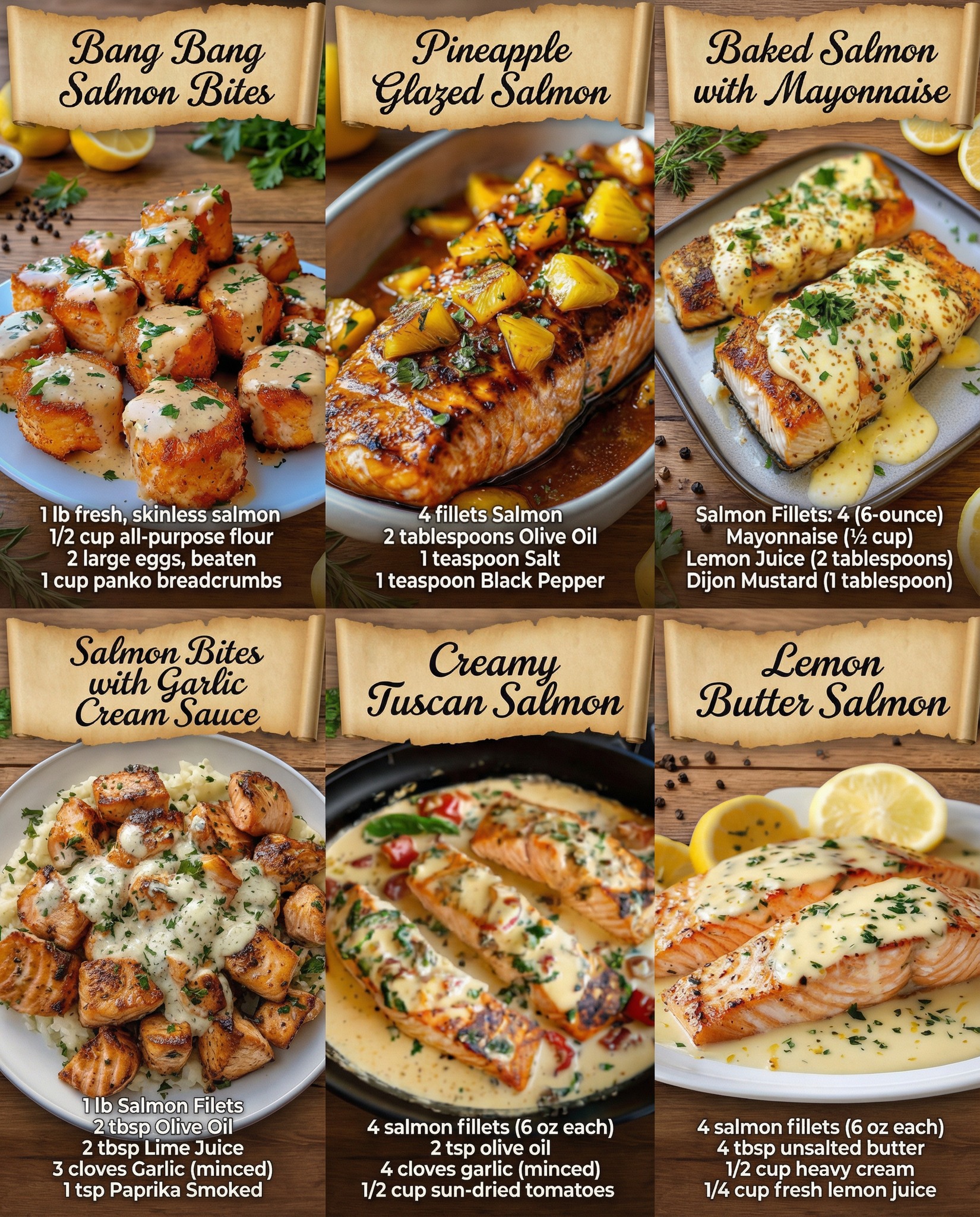
Introduction: My Journey to Loving Salmon
I’ll admit it – I used to be intimidated by cooking salmon. The thought of preparing fish at home seemed daunting, and I worried about ending up with dry, flavorless fillets or an overpowering fishy smell in my kitchen. Everything changed when my cousin, a professional chef, invited me over for dinner and served the most incredible pineapple-glazed salmon I’d ever tasted. When she revealed how simple it was to make, I felt inspired to experiment with salmon recipes at home.
That was three years ago, and salmon has since become a weekly staple in my kitchen. I’ve discovered that cooking salmon is not only easier than I imagined but also incredibly versatile. These six salmon recipes have become my go-to meals for busy weeknights, special occasions, and everything in between. Each recipe brings something unique to the table, from crispy bang bang salmon bites to elegant lemon butter salmon.
Why Salmon Should Be Your Protein of Choice
Salmon isn’t just delicious – it’s one of the healthiest proteins you can eat. Rich in omega-3 fatty acids, salmon supports heart health, brain function, and reduces inflammation. A single serving provides high-quality protein, vitamin D, B vitamins, and selenium. The American Heart Association recommends eating fish at least twice a week, and salmon makes meeting that goal absolutely enjoyable.
Beyond health benefits, salmon cooks quickly (usually 12-15 minutes), accepts a wide variety of flavors, and works for any occasion. Whether you’re preparing a romantic dinner for two or feeding a hungry family, these salmon recipes deliver impressive results with minimal effort. Fresh salmon has a mild, slightly sweet flavor that pairs beautifully with both delicate and bold seasonings.
Choosing and Preparing Fresh Salmon
Before diving into the recipes, let’s talk about selecting quality salmon. At the fish counter, look for fillets with firm, moist flesh and a fresh, ocean-like smell – never fishy or ammonia-like. The flesh should be vibrant pink or red (depending on the species) without any brown spots or discoloration.
I prefer wild-caught salmon when possible, particularly sockeye, coho, or king salmon. Farm-raised Atlantic salmon is more affordable and still nutritious, though the flavor is slightly milder. For these recipes, you’ll need 6-ounce fillets, which is the perfect single-serving size.
Always pat salmon dry with paper towels before cooking. This simple step ensures better searing and prevents steaming. Remove any pin bones using tweezers – run your fingers along the fillet to locate them. Let salmon sit at room temperature for 10-15 minutes before cooking for more even results.
Recipe #1: Bang Bang Salmon Bites
These crispy, bite-sized pieces of salmon coated in a creamy, spicy sauce are absolutely addictive. They’re inspired by the popular bang bang shrimp but made with salmon for a more substantial, nutritious meal.
Ingredients:
- 1 lb fresh, skinless salmon
- ½ cup all-purpose flour
- 2 large eggs, beaten
- 1 cup panko breadcrumbs
- Salt and pepper to taste
- Vegetable oil for frying
For the Bang Bang Sauce:
- ½ cup mayonnaise
- 3 tablespoons sweet chili sauce
- 1 tablespoon sriracha (adjust to taste)
- 1 teaspoon rice vinegar
- ½ teaspoon garlic powder
Step-by-Step Instructions:
Step 1: Prepare the Salmon Cut the salmon into 1-inch cubes, ensuring they’re all roughly the same size for even cooking. Pat them completely dry – this is crucial for achieving that crispy coating.
Step 2: Set Up Your Breading Station Arrange three shallow bowls: one with flour seasoned with salt and pepper, one with beaten eggs, and one with panko breadcrumbs. This classic breading technique creates an incredibly crispy exterior.
Step 3: Bread the Salmon Working with a few pieces at a time, coat each salmon cube in flour, shaking off excess. Dip in egg, letting excess drip off, then roll in panko, pressing gently to adhere. Place breaded pieces on a plate.
Step 4: Make the Bang Bang Sauce In a small bowl, whisk together mayonnaise, sweet chili sauce, sriracha, rice vinegar, and garlic powder. Taste and adjust heat level to your preference. The sauce should be creamy, slightly sweet, and pleasantly spicy.
Step 5: Fry the Salmon Bites Heat about ½ inch of vegetable oil in a large skillet over medium-high heat until it reaches 350°F. Carefully add salmon pieces in batches, avoiding overcrowding. Fry for 2-3 minutes per side until golden brown and crispy. The salmon should be just cooked through with a slightly pink center.
Step 6: Serve Transfer to a paper towel-lined plate to drain excess oil. Toss with bang bang sauce or serve the sauce on the side for dipping. Garnish with chopped green onions and sesame seeds.
Recipe #2: Pineapple Glazed Salmon
This recipe holds a special place in my heart as the one that transformed my relationship with salmon. The sweet and tangy glaze caramelizes beautifully, creating a restaurant-quality dish at home.
Ingredients:
- 4 salmon fillets
- 2 tablespoons olive oil
- 1 teaspoon salt
- 1 teaspoon black pepper
For the Pineapple Glaze:
- 1 cup fresh pineapple, diced
- ¼ cup pineapple juice
- 2 tablespoons honey
- 2 tablespoons soy sauce
- 1 tablespoon rice vinegar
- 1 teaspoon minced ginger
- 1 teaspoon minced garlic
Instructions:
Prepare the Glaze: In a small saucepan, combine pineapple juice, honey, soy sauce, rice vinegar, ginger, and garlic. Bring to a simmer over medium heat and cook for 5-7 minutes until slightly thickened. Add diced pineapple in the last 2 minutes.
Season and Sear: Pat salmon dry and season with salt and pepper. Heat olive oil in a large oven-safe skillet over medium-high heat. Sear salmon skin-side up for 3-4 minutes until a golden crust forms.
Glaze and Bake: Flip the salmon, brush generously with pineapple glaze, and transfer the skillet to a preheated 400°F oven. Bake for 6-8 minutes until salmon is just cooked through. The internal temperature should reach 145°F.
Finish: Serve with extra glaze and caramelized pineapple pieces spooned over the top. The combination of savory salmon and sweet-tangy glaze is absolutely irresistible.
Recipe #3: Baked Salmon with Mayonnaise
Don’t let the mayonnaise throw you off – this technique keeps salmon incredibly moist while creating a lightly browned, flavorful crust. It’s my mother-in-law’s secret recipe, and it never fails to impress.
Ingredients:
- 4 salmon fillets (6 ounces each)
- ½ cup mayonnaise
- 2 tablespoons lemon juice
- 1 tablespoon Dijon mustard
- Fresh herbs (dill or parsley), chopped
- Salt and black pepper to taste
- Lemon wedges for serving
Instructions:
Step 1: Preheat and Prep Preheat your oven to 425°F. Line a baking sheet with parchment paper or lightly grease it. This high temperature ensures the mayonnaise coating browns beautifully.
Step 2: Make the Topping In a small bowl, mix mayonnaise, lemon juice, Dijon mustard, and half the fresh herbs. Season with salt and pepper. The mixture should be spreadable but not runny.
Step 3: Prepare Salmon Pat salmon fillets dry and place on the prepared baking sheet. Season lightly with salt and pepper.
Step 4: Apply Coating Spread a generous layer of the mayonnaise mixture over the top of each fillet, covering it completely. The mayo acts as a protective barrier, keeping moisture sealed inside.
Step 5: Bake Bake for 12-15 minutes depending on thickness. The salmon is done when it flakes easily with a fork and the topping is lightly golden. Don’t overcook – salmon continues cooking slightly after being removed from heat.
Step 6: Garnish Sprinkle with remaining fresh herbs and serve with lemon wedges. The herbs add freshness that balances the rich mayonnaise coating.
Recipe #4: Salmon Bites with Garlic Cream Sauce
These salmon bites swimming in a luxurious garlic cream sauce are pure comfort food. Perfect over pasta, rice, or with crusty bread to soak up every drop of sauce.
Ingredients:
- 1 lb salmon fillets
- 2 tablespoons olive oil
- 2 tablespoons lime juice
- 3 cloves garlic (minced)
- 1 teaspoon paprika (smoked)
- Salt and pepper to taste
For the Garlic Cream Sauce:
- 2 tablespoons butter
- 4 cloves garlic (minced)
- 1 cup heavy cream
- ½ cup chicken or vegetable broth
- ¼ cup Parmesan cheese (grated)
- Fresh parsley (chopped)
- Salt and pepper to taste
Instructions:
Marinate Salmon: Cut salmon into large chunks. In a bowl, combine olive oil, lime juice, minced garlic, paprika, salt, and pepper. Add salmon pieces and marinate for 15-20 minutes.
Sear Salmon: Heat a large skillet over medium-high heat with a drizzle of oil. Add salmon pieces and sear for 2-3 minutes per side until golden. Remove and set aside.
Make the Sauce: In the same skillet, melt butter and sauté garlic until fragrant (about 1 minute). Add heavy cream and broth, bringing to a gentle simmer. Cook for 3-4 minutes until slightly reduced.
Finish: Stir in Parmesan cheese until melted. Return salmon to the skillet, spooning sauce over the pieces. Simmer for 2-3 minutes until salmon is cooked through. Garnish with fresh parsley.
The sauce should be silky and coat the back of a spoon. If too thick, add a splash of broth; if too thin, simmer a bit longer.
Recipe #5: Creamy Tuscan Salmon
Inspired by Italian cuisine, this recipe features salmon in a rich cream sauce with sun-dried tomatoes, spinach, and garlic. It tastes like something from a fine dining restaurant but comes together in under 30 minutes.
Ingredients:
- 4 salmon fillets (6 oz each)
- 2 teaspoons olive oil
- 4 cloves garlic (minced)
- ½ cup sun-dried tomatoes (chopped)
- 1½ cups heavy cream
- ½ cup chicken broth
- 2 cups fresh spinach
- ½ cup Parmesan cheese (grated)
- 1 teaspoon Italian seasoning
- Salt and pepper to taste
- Fresh basil for garnish
Instructions:
Sear the Salmon: Season salmon with salt, pepper, and Italian seasoning. Heat olive oil in a large skillet over medium-high heat. Sear salmon for 3-4 minutes per side until golden and almost cooked through. Remove and set aside.
Build the Sauce: In the same skillet, sauté garlic for 1 minute. Add sun-dried tomatoes and cook for another minute, releasing their flavors into the oil.
Create Creaminess: Pour in heavy cream and chicken broth. Bring to a simmer, stirring to combine. Add Parmesan cheese and stir until melted and smooth.
Add Greens: Toss in fresh spinach and cook until just wilted, about 2 minutes. The spinach adds color, nutrients, and a slight earthiness that balances the rich cream.
Combine: Return salmon to the skillet, nestling it into the sauce. Spoon sauce over the fillets and simmer for 2-3 minutes until salmon is cooked through.
Serve: Garnish with fresh basil and additional Parmesan if desired. This dish pairs beautifully with pasta, rice, or crusty Italian bread.
Recipe #6: Lemon Butter Salmon
Simple, elegant, and bursting with bright citrus flavor, lemon butter salmon is my go-to recipe when I want something special but don’t have much time. The buttery sauce with fresh lemon is absolute perfection.
Ingredients:
- 4 salmon fillets (6 oz each)
- 4 tablespoons unsalted butter
- ½ cup heavy cream
- ¼ cup fresh lemon juice
- 2 cloves garlic (minced)
- 1 tablespoon fresh parsley (chopped)
- 1 teaspoon lemon zest
- Salt and pepper to taste
- Lemon slices for garnish
Instructions:
Season Salmon: Pat salmon dry and season generously with salt and pepper on both sides.
Sear Perfectly: Melt 2 tablespoons of butter in a large skillet over medium-high heat. Once foaming, add salmon skin-side up. Sear for 4-5 minutes until a golden crust forms. Flip and cook for another 3-4 minutes.
Make Lemon Butter Sauce: Remove salmon to a plate. In the same skillet, melt remaining 2 tablespoons butter. Add minced garlic and sauté for 30 seconds. Add lemon juice, lemon zest, and heavy cream. Simmer for 2-3 minutes until slightly thickened.
Finish: Return salmon to the skillet, spooning the lemon butter sauce over each fillet. Cook for 1-2 minutes more. The sauce should be glossy and coat the salmon beautifully.
Plate: Serve immediately with extra sauce drizzled over top. Garnish with fresh parsley and lemon slices. The bright, buttery flavor is absolutely divine.
Nutritional Benefits of Salmon
Each of these recipes provides exceptional nutritional value. A 6-ounce serving of salmon contains approximately:
- Calories: 350-400 (depending on preparation)
- Protein: 34-40g
- Omega-3 fatty acids: 4,000mg
- Vitamin D: 100% daily value
- Vitamin B12: 250% daily value
- Selenium: 85% daily value
The addition of vegetables in recipes like Creamy Tuscan Salmon boosts fiber and micronutrient content, while the healthy fats in salmon aid in the absorption of fat-soluble vitamins.
Perfect Pairings for Salmon Dishes
Salmon’s rich flavor pairs beautifully with various sides and beverages. For the Bang Bang Salmon Bites, serve with coconut rice or Asian slaw. The Pineapple Glazed Salmon is fantastic with grilled vegetables and jasmine rice.
The creamy preparations (Garlic Cream Sauce, Tuscan, and Lemon Butter) pair wonderfully with simple sides that won’t compete with the rich sauces – try roasted asparagus, green beans, or a light arugula salad.
For wine pairings, I recommend Pinot Noir or Chardonnay with most salmon dishes. The Pineapple Glazed Salmon works beautifully with Riesling, whose sweetness complements the tropical flavors. For the Lemon Butter Salmon, try a crisp Sauvignon Blanc.
Expert Tips for Cooking Salmon Perfectly
Don’t Overcook: Salmon is best when slightly undercooked in the center. Remove it from heat when the internal temperature reaches 125-130°F; it will continue cooking to 145°F as it rests.
Room Temperature: Let salmon sit at room temperature for 15 minutes before cooking for more even results.
Skin Side Down: When pan-searing, start with the skin side down. This renders the fat and creates a crispy skin that some people love.
Test for Doneness: Gently press the salmon with your finger. It should feel firm but still have some give. Alternatively, insert a knife in the thickest part – it should slide through easily.
Rest Before Serving: Like steak, salmon benefits from a 3-5 minute rest after cooking. This redistributes the juices throughout the fillet.
Frequently Asked Questions About Salmon Recipes
Q: Can I use frozen salmon for these recipes? A: Yes! Thaw it completely in the refrigerator overnight, then pat very dry before cooking. Frozen salmon can release excess moisture, so the drying step is crucial.
Q: How do I prevent salmon from sticking to the pan? A: Make sure your pan is properly preheated and use enough oil. Don’t move the salmon too early – it will naturally release once a proper crust forms.
Q: What’s the white stuff that appears on cooked salmon? A: That’s albumin, a protein that becomes visible when salmon is cooked. It’s harmless and indicates the fish is done. Gentle cooking at lower temperatures reduces albumin.
Q: Can I make these recipes ahead? A: Salmon is best fresh, but you can prepare components ahead. Make sauces in advance and reheat gently. Bread the Bang Bang Salmon Bites and refrigerate for up to 4 hours before frying.
Q: What’s the best way to reheat leftover salmon? A: Gently reheat in a 275°F oven for 10-12 minutes, or eat cold in salads. Avoid microwaving as it can make salmon rubbery.
Q: Is it safe to eat salmon with a pink center? A: Yes! Unlike chicken, salmon can be safely consumed when still pink in the center. Many chefs prefer it this way for optimal texture and moisture.
Conclusion: Elevate Your Salmon Game
These six salmon recipes have completely transformed my weeknight dinner routine. What once seemed intimidating is now one of my favorite proteins to cook. Each recipe offers something unique – from the playful, crispy Bang Bang Salmon Bites that my kids devour, to the sophisticated Creamy Tuscan Salmon that impresses dinner guests every time.
The versatility of salmon never ceases to amaze me. Whether you’re craving something light and citrusy (Lemon Butter Salmon), tropical and sweet (Pineapple Glazed), or rich and indulgent (Garlic Cream Sauce), there’s a recipe here for every mood and occasion. Best of all, most of these dishes come together in 30 minutes or less, proving that healthy, delicious weeknight dinners don’t have to be complicated.
My Final Cooking Tip
Here’s the game-changing technique I wish I’d known earlier: invest in an instant-read thermometer. It takes all the guesswork out of cooking salmon perfectly. Insert it into the thickest part of the fillet – when it reads 125-130°F, remove the salmon from heat immediately. This simple tool has eliminated every instance of dry, overcooked salmon from my kitchen. The difference between perfectly cooked, moist salmon and dry, chalky salmon is often just 2-3 minutes of cooking time. A thermometer ensures you hit that sweet spot every single time, transforming you from a nervous salmon cook into a confident one. Trust me, it’s worth every penny!