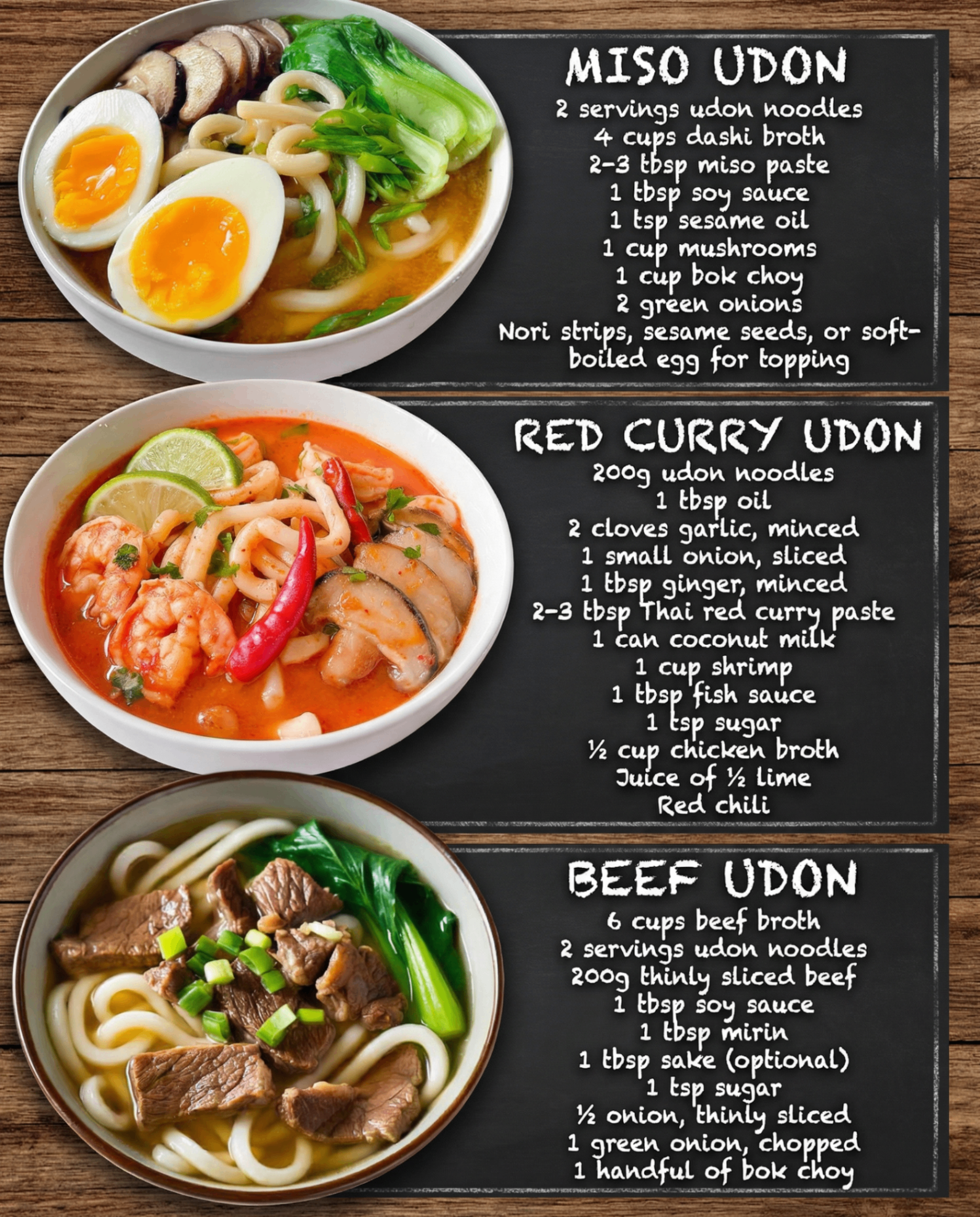
Udon noodles are one of the most comforting and versatile staples of Asian cuisine. Thick, chewy, and satisfying, udon noodles absorb flavors beautifully and work perfectly in brothy soups, rich curries, and savory meat-based dishes. Whether you’re craving a light Japanese miso broth, a bold Thai-inspired red curry, or a classic beef udon bowl, this guide has you covered.
In this article, we’ll walk you through three delicious udon noodle recipes featured in the image: Miso Udon, Red Curry Udon, and Beef Udon. Each recipe is easy to follow, packed with flavor, and perfect for home cooks of all levels.
What Are Udon Noodles?
Udon noodles are thick wheat-based noodles that originated in Japan. They are typically served in hot broth but can also be enjoyed cold or stir-fried. Thanks to their neutral flavor and chewy texture, udon noodles pair well with a wide range of ingredients such as vegetables, seafood, meat, and aromatic sauces.
Why udon noodles are so popular:
- Soft yet chewy texture
- Easy and quick to cook
- Adapt well to different cuisines
- Naturally comforting and filling
1. Miso Udon Recipe (Japanese Comfort in a Bowl)
Why You’ll Love This Recipe
Miso udon is warm, nourishing, and deeply umami-rich. The miso paste combined with dashi broth creates a savory base, while mushrooms, bok choy, and a soft-boiled egg make it both healthy and satisfying.
Ingredients
- 2 servings udon noodles
- 4 cups dashi broth
- 2–3 tablespoons miso paste
- 1 tablespoon soy sauce
- 1 teaspoon sesame oil
- 1 cup mushrooms (shiitake or button)
- 1 cup bok choy
- 2 green onions, sliced
- Nori strips (optional)
- Sesame seeds (optional)
- Soft-boiled eggs for topping
Instructions
- Cook the udon noodles according to package instructions. Drain and set aside.
- In a pot, bring the dashi broth to a gentle simmer.
- Add mushrooms and cook for 2–3 minutes until tender.
- Lower the heat and stir in the miso paste gently until fully dissolved.
- Add soy sauce and sesame oil.
- Add bok choy and simmer for another 1–2 minutes.
- Divide the cooked noodles into bowls and pour the hot miso broth over them.
- Top with green onions, soft-boiled egg halves, sesame seeds, and nori strips.
Pro Tips
- Never boil miso paste—this preserves its flavor and nutrients.
- White miso is mild and slightly sweet, while red miso is stronger and saltier.
2. Red Curry Udon Recipe (Bold, Creamy & Spicy)
Why You’ll Love This Recipe
This red curry udon combines the creaminess of coconut milk with the heat of Thai red curry paste. Shrimp, lime, and chili add freshness and spice, making this dish unforgettable.
Ingredients
- 200g udon noodles
- 1 tablespoon oil
- 2 cloves garlic, minced
- 1 small onion, sliced
- 1 tablespoon ginger, minced
- 2–3 tablespoons Thai red curry paste
- 1 can coconut milk
- ½ cup chicken broth
- 1 cup shrimp, peeled and deveined
- 1 tablespoon fish sauce
- 1 teaspoon sugar
- Juice of ½ lime
- Red chili (to taste)
- Fresh herbs for garnish (optional)
Instructions
- Cook udon noodles according to package instructions. Drain and set aside.
- Heat oil in a pot over medium heat.
- Sauté garlic, onion, and ginger until fragrant.
- Add red curry paste and cook for 1 minute to release aromas.
- Pour in coconut milk and chicken broth, stirring well.
- Add fish sauce, sugar, and chili. Simmer gently.
- Add shrimp and cook until pink and opaque (about 3–4 minutes).
- Stir in lime juice.
- Add noodles to the broth and serve hot.
Pro Tips
- Adjust curry paste based on spice tolerance.
- Swap shrimp with tofu or chicken for variations.
3. Beef Udon Recipe (Savory, Rich & Hearty)
Why You’ll Love This Recipe
Beef udon is a classic comfort dish. Tender slices of beef simmered in a soy-based broth pair perfectly with chewy noodles and crisp bok choy.
Ingredients
- 2 servings udon noodles
- 6 cups beef broth
- 200g thinly sliced beef
- 1 tablespoon soy sauce
- 1 tablespoon mirin
- 1 tablespoon sake (optional)
- 1 teaspoon sugar
- ½ onion, thinly sliced
- 1 green onion, chopped
- 1 handful bok choy
Instructions
- Cook udon noodles according to package instructions and set aside.
- Bring beef broth to a simmer in a pot.
- Add soy sauce, mirin, sake, and sugar.
- Add sliced onion and cook until softened.
- Add beef slices and cook gently until just tender.
- Add bok choy and simmer for 1 minute.
- Divide noodles into bowls and ladle the beef broth over them.
- Garnish with green onions.
Pro Tips
- Do not overcook the beef—it should remain tender.
- Ribeye or sirloin works best for udon.
Nutritional Benefits of Udon Noodles
- Provide energy through complex carbohydrates
- Low in fat
- Easy to digest
- Customizable with vegetables and proteins
Adding greens, lean meats, and seafood makes udon bowls a balanced meal.
Frequently Asked Questions (FAQs)
1. Can I use dried udon instead of fresh?
Yes, dried udon works perfectly. Just follow package cooking instructions carefully.
2. Are udon noodles gluten-free?
Traditional udon noodles contain wheat and are not gluten-free. Look for rice-based alternatives if needed.
3. Can I meal prep udon noodles?
Yes, but store noodles and broth separately to prevent sogginess.
4. What protein substitutes can I use?
Tofu, chicken, mushrooms, or seafood all work well.
5. How spicy is red curry udon?
It depends on the amount of curry paste used. You can easily adjust the heat level.
6. Can I freeze udon soup?
The broth freezes well, but noodles are best cooked fresh.
Conclusion
Udon noodles are the ultimate comfort food—warm, filling, and endlessly versatile. Whether you prefer the umami depth of Miso Udon, the creamy heat of Red Curry Udon, or the savory richness of Beef Udon, these recipes bring restaurant-quality flavor straight to your kitchen.
Each bowl tells a different story, inspired by Japanese and Southeast Asian flavors, yet simple enough for everyday cooking. Try one—or all three—and discover why udon noodles remain a beloved staple around the world.
If you’re looking for cozy meals that impress without complicated techniques, these udon recipes are the perfect place to start 🍜