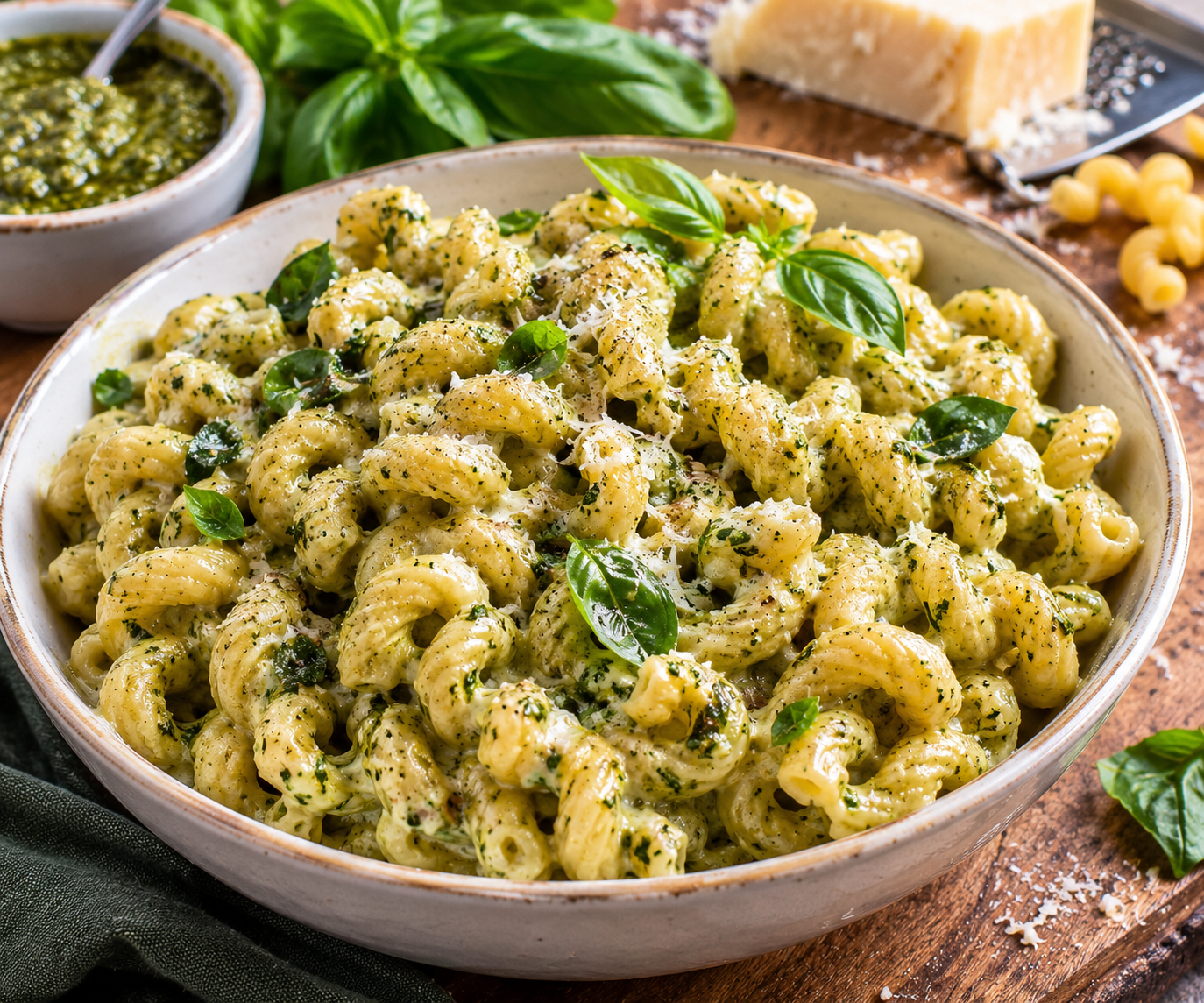
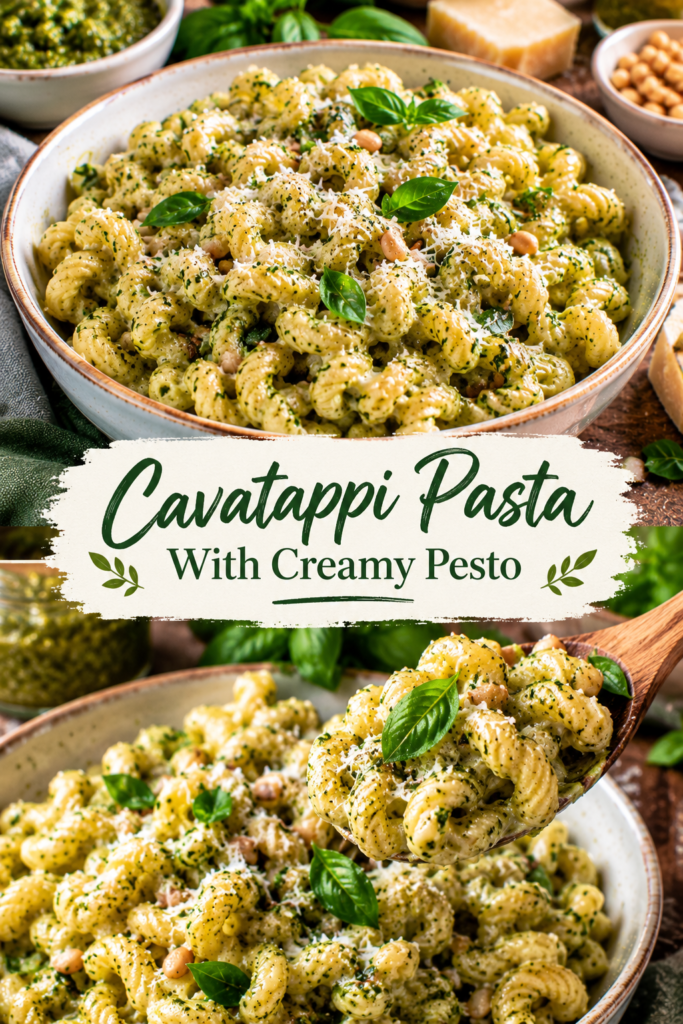
Cavatappi Pasta With Creamy Pesto: An Easy, Silky Weeknight Dinner
A jar of pesto can rescue a busy evening, but stirring it straight into hot noodles doesn’t always give you the dinner you pictured. The oil pools at the bottom of the bowl, the basil tastes sharp, and the pasta looks dry by the second helping. This cavatappi pasta with creamy pesto fixes that with a short, gentle cream sauce that clings to every spiral.
You need one pot, one skillet and a few everyday ingredients: butter, garlic, heavy cream, Parmesan and the pesto you already like. Low heat at the right moments keeps the cheese smooth and the pesto green. It works with store-bought or homemade pesto and halves easily for two.
*Estimated times. Your pasta’s package directions decide the final number.
Why this recipe works
Plain pesto is a coating. A little cream turns it into a sauce, and each step has a job:
- The shape helps. Cavatappi’s ridges and hollow center hold sauce, so a modest amount flavors every bite.
- Parmesan thickens. Melted slowly into cream, it gives body without flour.
- Pasta water binds. Its starch keeps fat and liquid blended and lets you adjust thickness.
- Pesto goes in off the heat. Direct heat dulls basil’s color and aroma; residual warmth is enough.
Ingredients and what each one does
Pasta
- 1 lb (454 g) dried cavatappi: ridges and a hollow center hold sauce inside and out.
- 1 tablespoon kosher salt, for the water: seasons the pasta itself. Use less if your salt is Morton or fine.
Creamy sauce
- 2 tablespoons (28 g) unsalted butter: carries the garlic flavor.
- 3 garlic cloves, minced: adds a mellow, cooked garlic note.
- 1 cup (240 ml) heavy cream: turns pesto into a sauce and softens its sharp edges.
- 2 oz (about 55 g) Parmesan, finely grated, about ¾ cup: melts into the cream and thickens it without flour.
Pesto and finish
- ½ cup (about 125 g) basil pesto, store-bought or homemade: the main flavor; brands vary in salt and oil.
- ½ to 1 cup reserved pasta water: starchy water keeps the sauce glossy and adjustable.
- ¼ teaspoon black pepper, plus salt to taste: season at the end, since pesto and cheese are salty.
- Fresh basil and extra Parmesan, for serving: a fresh, savory finish.
Pesto tip
Choose a pesto with basil and olive oil near the top of the label, and taste it before salting anything. Prefer homemade? Try our homemade basil pesto.
Substitutions and add-ins
- Pasta: rotini, fusilli, gemelli or penne rigate, same weight, cooked to their package time.
- Heavy cream: half-and-half works, but it curdles more easily, so warm it instead of simmering.
- Richer swap: ½ cup mascarpone or 4 oz cream cheese, thinned with pasta water.
- Parmesan: Pecorino Romano works but is saltier.
- Gluten-free: gluten-free cavatappi or rotini; stir gently, as it breaks more easily.
- Add-ins: cooked chicken or shrimp, baby spinach, peas or cherry tomatoes. Add them with the pasta in step 6. For a quick protein, see our pan-seared chicken breast.
Equipment
A large pot, a 12-inch skillet, a colander or spider strainer, a heatproof cup for pasta water, a fine grater and a wooden spoon or tongs.
How to make cavatappi pasta with creamy pesto
Put the water on first. The sauce comes together while the pasta cooks.
Boil the water
Bring 4 to 5 quarts of water to a boil in a covered pot, then add the salt.
Cook the pasta
Cook the cavatappi to al dente according to the package, tasting 1 to 2 minutes early. Save 1 cup of pasta water, then drain without rinsing.
Soften the garlic
Meanwhile, melt the butter in a 12-inch skillet over medium-low heat. Stir in the garlic for 30 to 60 seconds, until fragrant but still pale.
Simmer the cream
Add the cream and simmer gently for 2 to 3 minutes, stirring, until it lightly coats a spoon.
Melt the Parmesan
Reduce the heat to low. Add the Parmesan a handful at a time, stirring until smooth.
Toss the pasta
Add the pasta and ¼ cup pasta water. Toss over low heat for about 1 minute.
Add the pesto off the heat
Turn off the burner and stir in the pesto. Add pasta water a splash at a time until the sauce is glossy and loose.
Season and serve
Taste, add pepper and salt if needed, and top with basil and Parmesan.
Cooking tip
Set a measuring cup beside the stove so you remember to save pasta water before draining. New to boiling pasta? Our guide to cooking pasta al dente covers the basics.
Visual and texture cues
- Garlic: fragrant and pale. Golden brown means it’s gone too far.
- Cream: small bubbles at the edges, never a hard boil. It’s ready when it leaves a thin film on a spoon.
- Cheese: fully melted. Strings or specks mean the heat is too high.
- Finished sauce: glossy, pale green and loose enough to settle slowly when you tilt the pan, with no puddle under the pasta.
Troubleshooting common mistakes
- Grainy sauce: the heat was too high, or the cheese was pre-shredded. Off the heat, stir in hot pasta water. Grate from a block next time.
- Oily or separated: the pesto got too hot. Off the heat, stir in pasta water a tablespoon at a time.
- Dull or brown: the pesto was cooked. Add it only after the burner is off.
- Too salty: add a splash of cream and a squeeze of lemon, and salt only at the end next time.
Time-saving tips
- Cover the pot so the water boils faster, and grate the cheese while you wait.
- Measure the cream and pesto before the pasta goes in.
- Use a spider to move pasta straight into the skillet with a little starchy water.
Serving ideas
This is a rich pasta, so pair it with something fresh: a green salad with lemon vinaigrette, roasted broccoli or asparagus, or garlic bread for the extra sauce.
Storage, freezing and reheating
Refrigerate leftovers in shallow, covered containers within 2 hours. USDA guidance, shared by University of Illinois Extension, recommends eating them within 3 to 4 days.
Freezing is safe for 3 to 4 months, according to Michigan State University Extension, but cream sauces may separate slightly and the pasta softens. For better results, freeze plain pesto and cook the pasta fresh.
Reheat in a skillet over low heat with a splash of milk or water, stirring until loose, or covered in the microwave, stirring halfway. Heat until steaming throughout and 165°F (74°C) in the center.
FAQs
Is cavatappi good with pesto?
Yes. Its ridges and hollow center catch creamy pesto sauce, so every bite is evenly coated.
What pasta is best for creamy pesto sauce?
Short, twisted or ridged shapes: cavatappi, rotini, fusilli, gemelli or penne rigate.
What do you add to pesto to make it creamy?
Heavy cream is the most reliable choice. Mascarpone, cream cheese or ricotta also work when stirred in over low heat.
Do you just add a jar of pesto to pasta?
You can, but loosen it with a few tablespoons of pasta water off the heat so it coats instead of turning oily. For a creamy version, follow this recipe.
Why shouldn’t pesto be heated?
Direct heat dulls basil’s color and aroma and can make the oil and cheese separate. The warmth of the pasta is enough.
What’s the difference between pesto and creamy pesto?
Classic pesto is uncooked basil, garlic, pine nuts, cheese and olive oil. Creamy pesto adds dairy, making it paler, milder and saucier.
Final thoughts
Cavatappi pasta with creamy pesto turns a jar in the fridge and a box in the pantry into a dinner that feels finished. Keep the heat low for the cheese, add the pesto off the burner, and let pasta water do the adjusting.
Make it tonight, then tell us in the comments which pesto you used and what you added.
Recipe card
Cavatappi Pasta With Creamy Pesto
Prep 5 min*, cook 20 min*, total 25 min*. Serves 4. Main course, Italian-American.
Ingredients
- 1 lb (454 g) dried cavatappi
- 1 tablespoon kosher salt, for the water
- 2 tablespoons (28 g) unsalted butter
- 3 garlic cloves, minced
- 1 cup (240 ml) heavy cream
- 2 oz (about 55 g) Parmesan, finely grated, about ¾ cup
- ½ cup (about 125 g) basil pesto, store-bought or homemade
- ½ to 1 cup reserved pasta water
- ¼ teaspoon black pepper, plus salt to taste
- Fresh basil and extra Parmesan, for serving
Instructions
- Boil salted water and cook the cavatappi to al dente. Save 1 cup pasta water; drain.
- Melt butter in a skillet over medium-low; cook garlic 30 to 60 seconds.
- Add cream; simmer gently 2 to 3 minutes.
- On low heat, melt in the Parmesan a handful at a time.
- Add pasta and ¼ cup pasta water; toss 1 minute.
- Off the heat, stir in pesto, loosening with pasta water.
- Season and serve with basil and Parmesan.
Notes
*Times are estimates. Taste before salting, as pesto brands vary. Refrigerate leftovers within 2 hours and eat within 3 to 4 days.
Nutrition: varies by pesto brand; calculate with your exact products.
Cavatappi Pasta Salad
Cavatappi is a hollow, ridged, corkscrew-shaped pasta, and its name means “corkscrew” in Italian. Yes, it works very well in pasta salad. The twists and hollow tubes grab onto dressing and small chopped pieces.
Don’t confuse it with fusilli, which is a flat twist. Cavatappi is a hollow tube. Some stores sell it under other names, so look for the corkscrew shape on the package.
- Category: Dinner
Ingredients
Everything here is simple. You’ll need a large stockpot, a large mixing bowl, and a colander. The salad uses plain pantry staples plus two fresh vegetables.
- 1 lb. Cavatappi pasta noodles
- 4 quarts of water for boiling
- 1 tsp. of salt in the cooking water
- 1 1/2 cups of Hellmann’s mayonnaise
- 1 cup of B & G dill pickle juice
- 2 tbsp. of sugar
- 1 tsp. of celery salt
- 2 large ripe tomatoes (beefsteak or vine-ripe), chopped into 1 inch pieces
- 1 large green pepper, chopped into 1 inch pieces
Instructions
Read the steps once before you start. The pasta needs a rinse and a cool-down before it meets the dressing.
Notes
How Do You Keep Pasta Salad From Drying Out?
Use plenty of dressing, chill the salad, and stir it before serving. Pasta keeps soaking up dressing while it sits, so it looks drier the longer it waits.
This recipe starts with 1 1/2 cups of mayonnaise and 1 cup of pickle juice for 1 pound of pasta, so there’s plenty to go around. If leftovers look dry the next day, stir in a splash more pickle juice.
5 Pasta Salad Mistakes to Avoid
- Using too little water. Most sources suggest 4 to 6 quarts per pound of pasta, so the noodles can move freely.
- Overcooking. Stick to the 12 minutes. Mushy pasta turns pasty once it’s dressed.
- Skipping the cold rinse. Warm noodles can make the dressing loose, and extra starch can make them gummy.
- Skipping the chill or the final stir. The two hours let the flavors blend. The last stir re-coats the pasta.
- Leaving the bowl out too long. Keep it cold, and return it to the fridge within 2 hours.
How Long Does Cavatappi Pasta Salad Last?
Store it in a covered container in the refrigerator for 3 to 4 days. That matches the USDA guidance for mayonnaise-based salads, as reported by PureWow. Some sources allow longer, but this is the safer rule.
Serve it cold, straight from the fridge, with a good stir first. Skip the microwave, since this is a cold salad.
Ways to Switch It Up
- Add cucumber, black olives, red onion, or feta for a Greek-style twist, as shown in the photo. These are optional, so add them to taste.
- Sprinkle chopped parsley on top for color.
- Serve it next to grilled chicken or burgers.